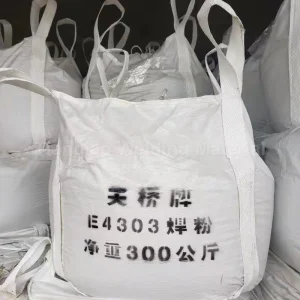
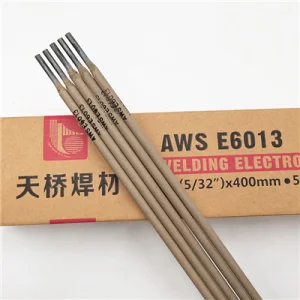
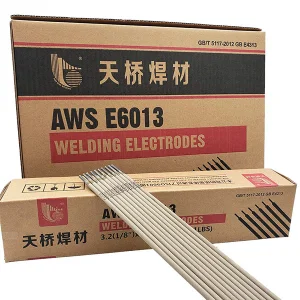
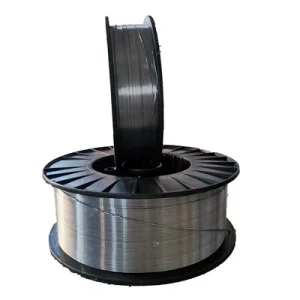
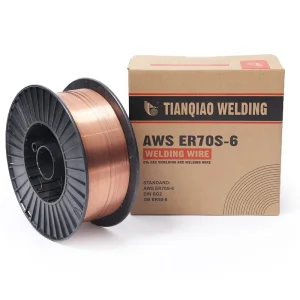
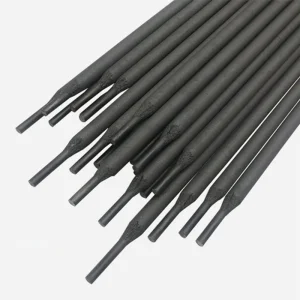
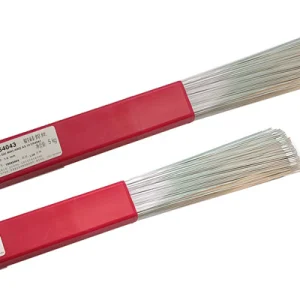
Explore our flagship industrial-grade electrodes, flux-cored wires, and specialized flux formulations engineered for seamless integration into automated welding cells, high-speed robotic systems, and heavy-duty structural manufacturing.
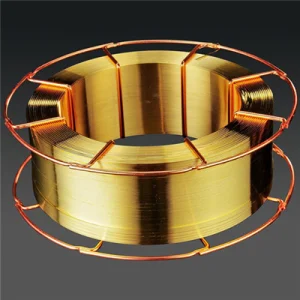
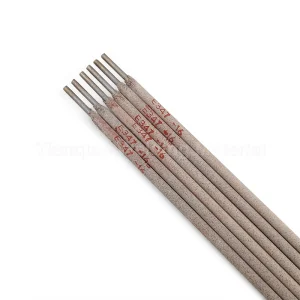
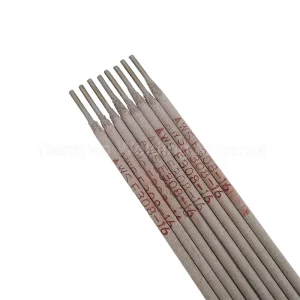
In the contemporary era of global industrial manufacturing, the transition from manual Shielded Metal Arc Welding (SMAW) and semi-automatic Gas Metal Arc Welding (GMAW) toward fully automated robotic welding cells represents a fundamental technological shift. High-precision automated systems—encompassing multi-axis articulated robots, linear gantries, continuous submerged arc welding (SAW) units, and laser-MIG hybrid setups—demand consumables that offer unyielding physical consistency, exact chemical tolerances, and superior feedability. As a premier China Welding Automation Supplier & Factory, Shijiazhuang Tianqiao Welding Materials Co., Ltd. sits at the intersection of metallurgy, chemistry, and robotic optimization.
Automation in joining technology is no longer purely about robotic machinery; it is governed by the consistency of the filler wire and electrode chemistry. A 0.02mm deviation in wire diameter or inconsistent flux coating can result in micro-stoppages, arc instability, porosity, and costly line downtime in continuous automated production environments.
Manual welding rarely exceeds a 30% to 40% duty cycle due to operator fatigue and electrode changeovers. Automated welding systems operate at 80% to 95% duty cycles. Filler metals must withstand continuous electrical loading without thermal breakdown of wire coatings or flux flaking.
Robotic wire feeder conduits stretch over several meters. Solid wires like ER70S-6 and flux-cored wires like E71T-11 must maintain strict cast (diameter of wire loop) and helix (pitch elevation) standards to guarantee zero micro-jamming inside torch liners.
In automated multipass welds, manual slag chipping negates speed advantages. Formulations like Rutile E6013, E7024 iron powder, and SJ301 submerged flux are chemically optimized to form crisp, self-peeling slag layers under differential cooling contraction.
Heavy engineering sectors globally—spanning North American infrastructure construction, European shipbuilding, South American mining equipment maintenance, and Middle Eastern petrochemical plant construction—face a acute shortage of certified welder technicians. The American Welding Society (AWS) estimates a structural shortfall of over 300,000 welding professionals in Western markets over the coming decade. Consequently, enterprises are investing heavily in robotic cells.
However, switching to automated hardware without upgrading the consistency of welding consumables leads to high scrap rates, erratic burnbacks, arc wander, and poor radiographic testing (RT) passage rates. China's mature industrial manufacturing supply chain, backed by advanced wire extrusion technology and automated powder blending facilities, provides the ideal economic and technical balance for worldwide OEM distributors and plant operators.
| Performance Parameter | Traditional Manual Welding (SMAW/GMAW) | Automated Robotic Welding (Tianqiao Grade) | Engineering Impact |
|---|---|---|---|
| Operating Arc Duty Cycle | 25% – 40% (Intermittent) | 80% – 95% (Continuous) | 3x to 4x higher daily bead output per station |
| Wire Feed Speed Variation | ± 8% (Manual drift & torch bending) | < ± 1% (Precision encoder feedback) | Uniform bead width and zero undercutting |
| Spatter Index & Clean-up | High spatter requiring manual grinding | Ultra-low spatter (Optimized surface coating) | 90% reduction in post-weld surface finishing labor |
| Mechanical Property Consistency | Variable dependent on operator skill | Homogeneous microstructure across 1000m seams | Guaranteed Charpy V-Notch impact toughness |
| Consumable Scrap Percentage | 15% – 20% (Stub loss & spool ends) | < 2% (Bulk drums 250kg / continuous spools) | Direct material cost reduction & reduced inventory overhead |
Achieving flawless automated welds requires a granular understanding of flux chemistry, alloy transfer efficiency, shielding gas ionization, and crystal grain nucleation during rapid solidification. Shijiazhuang Tianqiao Welding Materials Co., Ltd. formulates product chemistries explicitly matching international codes including AWS, GB, ISO, EN, and JIS.
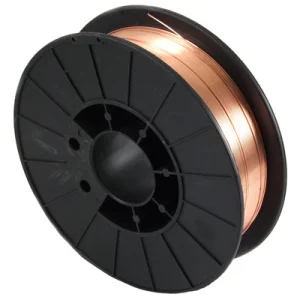
Engineered with high levels of Manganese (Mn) and Silicon (Si) deoxidizers, our copper-coated solid wires dissolve surface mill scale and light rust without forming porosity. The ultra-uniform micro-thin copper layer prevents atmospheric oxidation while minimizing contact tip wear inside robotic torches.
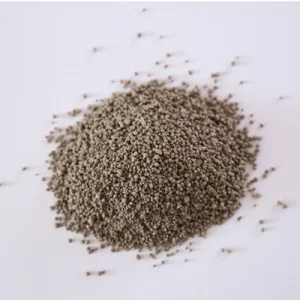
Designed for heavy plate longitudinal and circumferential girth seams, SJ301 provides neutral metallurgic reactivity with low silicon and manganese burn-out. It yields exceptional impact values at sub-zero temperatures and supports high welding speeds over 60 cm/min without bead humping.
Formulated with precise Ferrite Numbers (FN 3-8) to eliminate hot cracking during automatic orbital welding of pressure vessels and chemical piping. Niobium addition in AWS E347-16 stabilizes carbon to prevent chromium carbide precipitation and intergranular corrosion.
Eliminates the necessity for external shielding gas tanks, making it ideal for outdoor automated infrastructure erection. The inner core contains self-shielding fluoride-aluminum compounds that form a dense protective vapor blanket over the molten pool.
Utilizing high-chromium carbide microstructures, these specialized rods are applied by automated surfacing manipulators to rebuild worn valve seats, wear plates, crusher rollers, and excavator teeth, extending equipment service life by up to 300%.
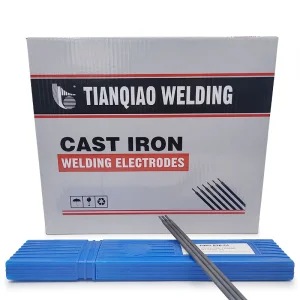
Pure nickel core chemistry yields exceptionally soft, machinable deposit layers with low coefficient of thermal expansion, preventing stress fractures in engine blocks, pump casings, and heavy gearbox housing repairs.
Below is the authentic corporate record and history of our industrial manufacturing base, demonstrating over a decade and a half of persistent quality, innovation, and global supply chain expansion.
Shijiazhuang Tianqiao Welding Materials Co., Ltd was founded in 2007 located in 30 kilometers in the southwest of shijiazhuang. Our factory traffic is very convenient just 20 kilometers to the west of 107 national highway, also near to the Shixing and Jingzan highway. We have strong technical force, complete product testing equipment so that we can keep stable product quality. Our company is composed of production department, technical department, R&D department, QC & Laboratory, Sale department, Logistic department.
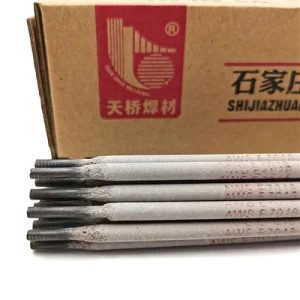
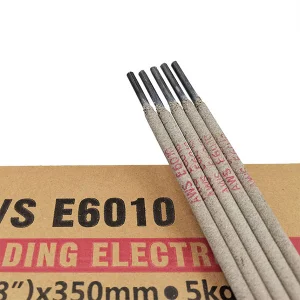
Our products include kinds of welding electrodes with the brand of "Yuanqiao", "Changshan", such as low carbon steel, low alloy steel, heat-resistant steels, low temperature steel, stainless steel, cast iron, hard surfacing welding electrodes. All kinds of sintered flux and various kinds of welding wire and various mixed welding powder. Our products have excellent performance, stable quality, elegant welding molding, good slag removal, good ability to resist rust, Stomata and crack, good and stable deposited metal mechanics performance.
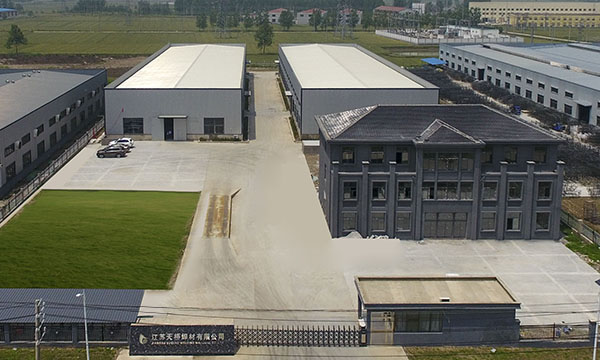
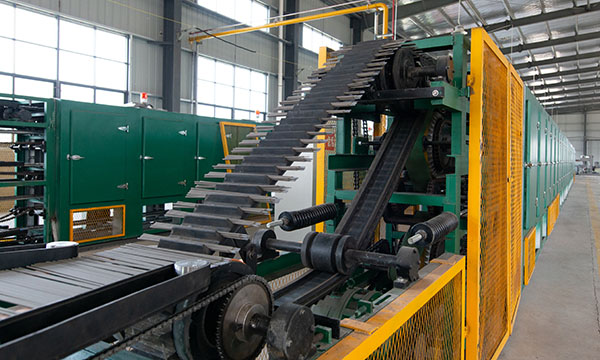
The products are widely used in various national economic fields, such as machinery, metallurgy, petroleum chemical industry, boiler, pressure vessel, the ships, the buildings, bridges, and so on. The products are sold to all over the country, and well received by the vast users.
Our products are one hundred percent exported and have sold worldwidely, mainly to US, Europe, South America, Australia, Africa, Middle East, Southeast Asia and etc. Our products meet customers warm welcome due to the excellent quality, outstanding performance and competitive price.
Under the spirit of "Supreme Quality, honesty, win-win cooperation", we are willing to achieve common development and create brilliance with all of customers. We are looking forward to establish mutual benefit, long-term and stable relationship with customers and distributors all over the world. We believe we can achieve splendid future by our efforts together.
China's dominance in industrial consumable manufacturing is rooted in complete supply chain integration. From local high-purity iron ore refining to automated high-speed wire drawing machines, Chinese factories provide unmatched scaling capability, strict batch-to-batch repeatability, and economical OEM pricing.
Direct access to domestic top-tier steel mills allows precise customization of heats, controlling residual elements like Sulfur (S < 0.010%) and Phosphorus (P < 0.015%) to prevent solidification cracking.
State-of-the-art hydraulic concentricity extruders ensure electrode flux coating thickness variations remain below 0.02mm, eliminating arc wandering and uneven melting side-to-side.
Every batch undergoes Optical Emission Spectroscopy (OES) chemical analysis, universal mechanical tensile testing, Charpy V-Notch impact testing, and X-ray non-destructive evaluation.
Flexible branding, private labeling, vacuum foil sealed inner cartons, moisture-proof plastic pails, and heavy-duty wooden pallets built to survive long-haul oceanic shipping routes.
For global purchasing directors, EPC contractors, and brand distributors, selecting a China supplier requires a transparent quality roadmap. Shijiazhuang Tianqiao operates under a standardized 6-step procurement framework ensuring zero friction from initial sample validation to bulk delivery.
Customer submits base metal properties, joint designs, target mechanical strength (tensile, yield, elongation), impact test temperatures, and welding process specifications (SMAW, GMAW, FCAW, SAW).
Our R&D department adjusts flux mineral ratios or wire copper coating parameters. Trial samples are produced and subjected to chemical spectroscopic verification and welding trials.
Test coupons are welded and evaluated according to AWS A5.1 / A5.18 / A5.20 standards. Certificates of Conformance (EN 10204 3.1 Mill Test Certificates) are compiled detailing heat chemistry and mechanical values.
Upon sample sign-off, automated extruders and wire drawing lines commence full-scale production under continuous in-line monitoring of wire diameter, coating concentricity, and moisture content.
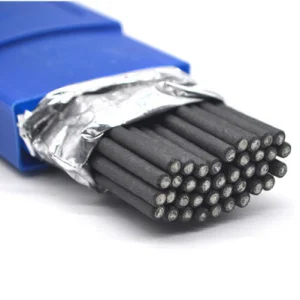
Consumables are sealed in foil packs with desiccant or shrink-wrapped spools inside rugged corrugated boxes, mitigating hydrogen absorption risks during ocean transit across humid tropical zones.
Direct dispatch from our facility near 107 national highway to major Chinese shipping ports (Tianjin/Qingdao), managing export customs clearance, bill of lading documentation, and multimodal delivery.
As automated welding shifts toward smart factories powered by Artificial Intelligence and IoT sensor feedback, consumables must adapt to real-time high-speed data acquisition. Laser seam tracking sensors and vision-guided robotic arms constantly adjust arc voltage and wire feed speed based on joint gap fluctuations. Filler materials must demonstrate forgiving voltage windows without generating arc disturbance or burnbacks.
Tianqiao is actively researching low-fume rutile electrode coatings and hexavalent chromium-reduced flux systems to align with stringent global environmental standards, improving workplace air safety while preserving high metal deposition rates.
Modern synergic power sources pulse electrical current thousands of times per second. Our ER70S-6 wire features tightly controlled surface resistivity, ensuring instant arc reignition during high-frequency droplet detachment.
Combining deep laser penetration with MIG filler metal deposition allows single-pass welding of 12mm+ steel plates. Requires wires with zero surface impurities to avoid center-line porosity under high thermal cooling rates.
To comply with nuclear, aerospace, and offshore structural tracking regulations, all palletized shipments include QR-coded lot traceability linking directly to raw steel heat numbers and batch laboratory QA reports.
Find authoritative answers to common engineering, procurement, and metallurgical questions regarding automated welding consumables and factory OEM partnerships.
Browse our additional catalog of specialized flux powders, solid MIG wires, flux-cored wires, and alloy surfacing rods engineered for rigorous operational environments.
 Tianqiao Welding