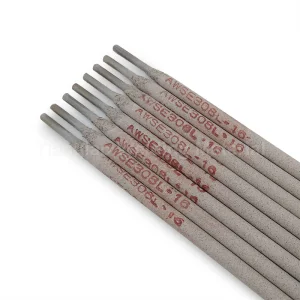
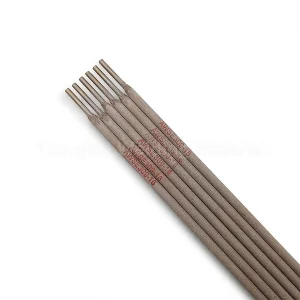
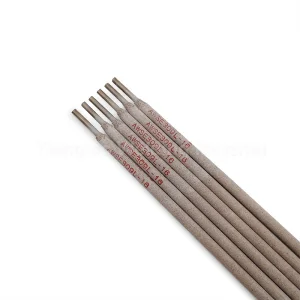
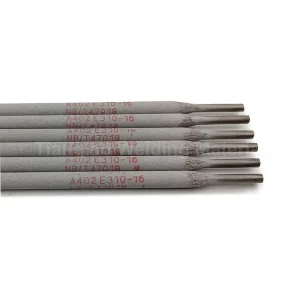
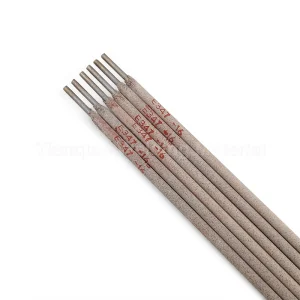
China Stainless Steel Welding Electrode AWS E308-16 (A102) Manufacturer, Supplier
It can be used to the corrosion resistance of stainless steel structure, such as the 06Cr19Ni9 and 06Cr19Ni11Ti, whose working temperature below 300 ℃; it can also be used for stainless steel structure using under cryogenic temperatures, such as liquid nitrogen container, liquefied natural gas containers, etc.
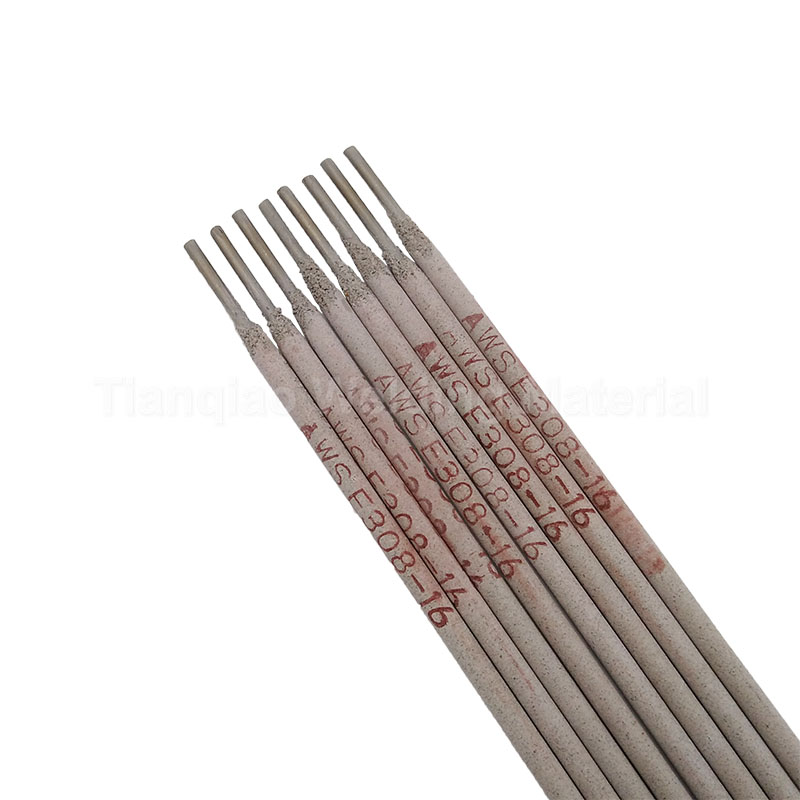
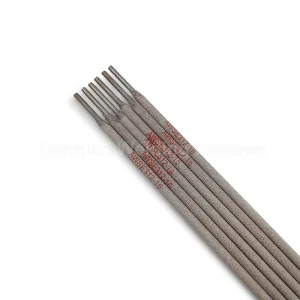
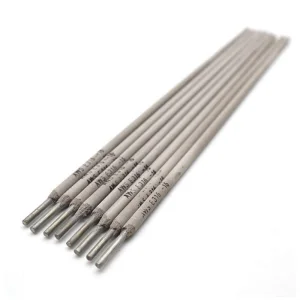
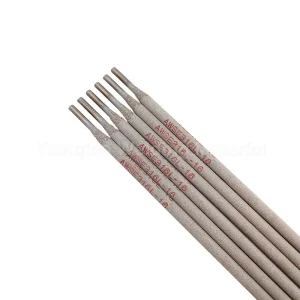
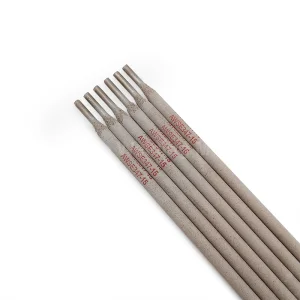
E308-16 is a coated rutile type Cr18Ni9 stainless steel. Both AC and DC can be used and it is suitable for all-position welding. It offers excellent welding performance including a stable arc, minimal spatter, easy slag removal, and a superior weld appearance. The deposited metal provides outstanding resistance to intergranular corrosion.
Applications
This electrode is ideal for the corrosion resistance of stainless steel structures, such as 06Cr19Ni9 and 06Cr19Ni11Ti, with working temperatures below 300 ℃. It is also highly recommended for stainless steel structures operating under cryogenic temperatures, including liquid nitrogen containers and liquefied natural gas (LNG) containers.
Deposit Composition (Quality Score): %
Items
C
Cr
Ni
Mo
Mn
Si
P
S
Cu
Requirements
≤0.08
18.0-21.0
9.0-11.0
≤0.75
0.5-2.5
≤1.00
≤0.04
≤0.03
≤0.75
Typical Results
0.062
19.34
10.14
0.28
1.08
0.66
0.025
0.010
0.08
Mechanical Properties
Items
Tensile Strength Rm/MPa
Elongation A/%
Charpy V-Notch KV2(J)-196℃
Requirements
≥550
≥30
≥29
Typical Results
570
38
36
Welding Positions
PA, PB, PD, PF
Typical Operating Procedures (AC, DC+)
Diameter (mm)
2.0
2.5
3.2
4.0
5.0
Current (A)
25-50
50-80
80-110
110-160
160-200
ATTENTION & USAGE GUIDELINES:
Electrodes must be baked at 320-350 ℃ for 1 hour before welding; ensure they are dry during use.
All rust, oil, water, and impurities must be removed from the weld zone before operation.
DC power supply is recommended. While AC can be used, it has shallower penetration; current should be controlled to avoid coating redness or cracking.
Minimize heat input and avoid excessive electrode oscillating amplitude.
Maintain preheat and interlayer temperatures below 150 ℃.
General Manufacturing Requirements
The manufacture of welded structural parts must comply with design and process documents. For ambient temperature:
Low carbon steel: ≥ -20℃
Low alloy structural steel: ≥ -15℃
Under low-temperature conditions, the steel surface must be preheated (100-200℃). The preheating zone width must be >4 times the plate thickness and not less than 100mm on each side. For parts with high rigidity, post-weld heat preservation or tempering is required to eliminate stress.
Packaging & OEM Services
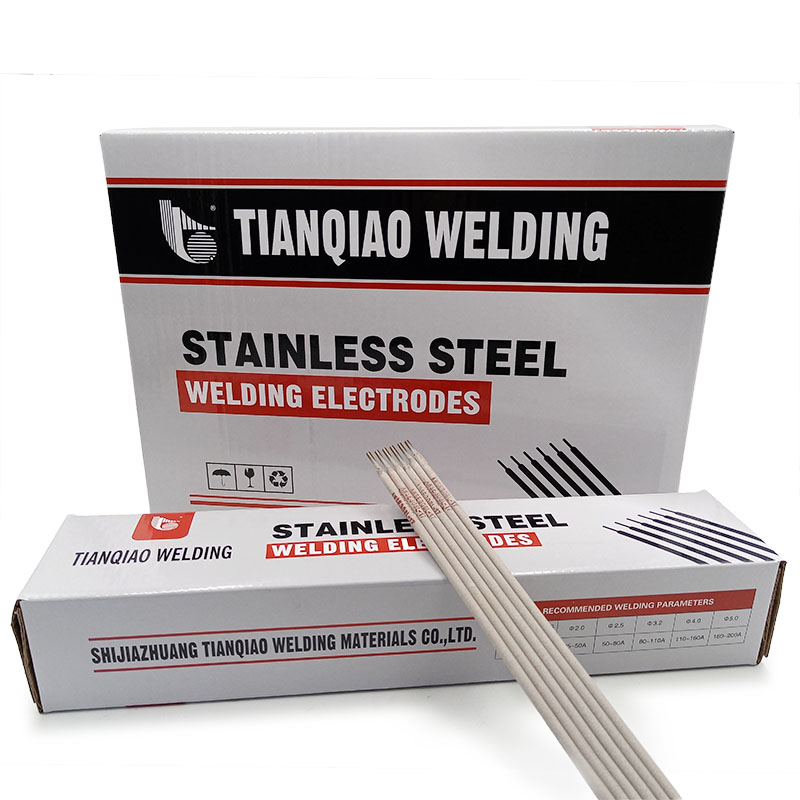
Standard Packaging: 5kg/box, 4boxes/carton (20kgs/carton), 50cartons/pallet. Approximately 21MT - 26MT per 1X20" FCL.
OEM/ODM: We fully support OEM/ODM services and can customize packaging according to your design specifications. Please contact us for detailed discussions.
Frequently Asked Questions
What is E308-16 welding electrode used for?
It is primarily used for welding corrosion-resistant stainless steel structures like 06Cr19Ni9 and 06Cr19Ni11Ti at temperatures below 300°C, as well as cryogenic containers for liquid nitrogen and LNG.
Does E308-16 support AC or DC welding?
It supports both AC and DC. However, DC is generally recommended as AC welding typically results in shallower penetration.
What is the required baking temperature for these electrodes?
The electrodes must be baked at 320-350 ℃ for exactly 1 hour before use to ensure optimal performance and dryness.
Can E308-16 be used for all-position welding?
Yes, E308-16 is designed for all-position welding, including flat (PA), horizontal-vertical (PB), overhead (PD), and vertical-up (PF) positions.
What are the advantages of the rutile coating?
The rutile coating ensures a very stable arc, minimal spatter during operation, very easy slag removal, and an aesthetically pleasing weld bead.
How should I handle welding in low-temperature environments?
The steel surface should be preheated to 100-200℃. The preheating zone must be wide enough (at least 100mm on each side or 4x the plate thickness) to ensure structural integrity.
 Tianqiao Welding