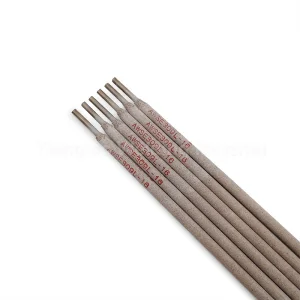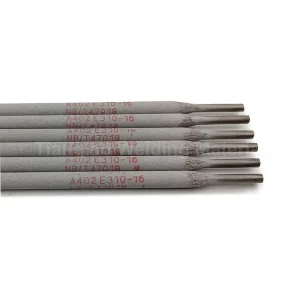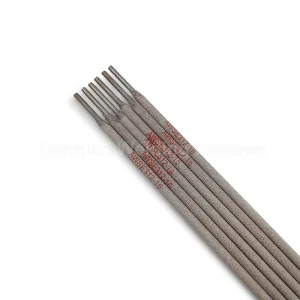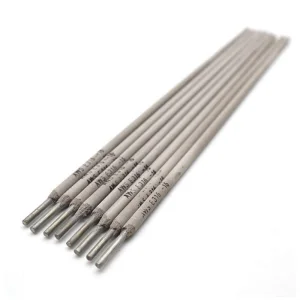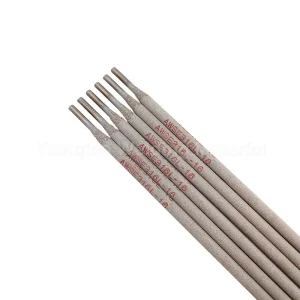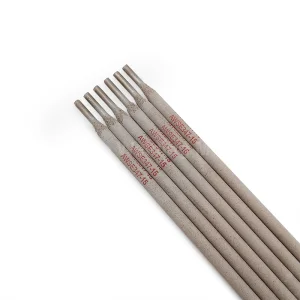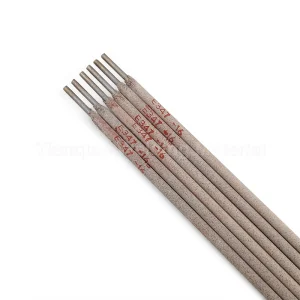
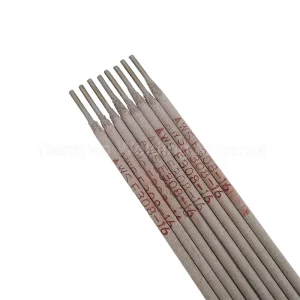
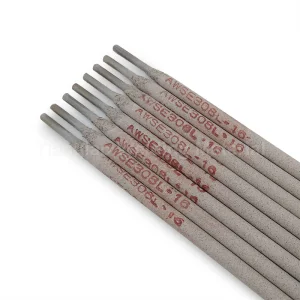
China Stainless Steel Welding Electrode AWS E347-16 (A132) Manufacturer, Factory

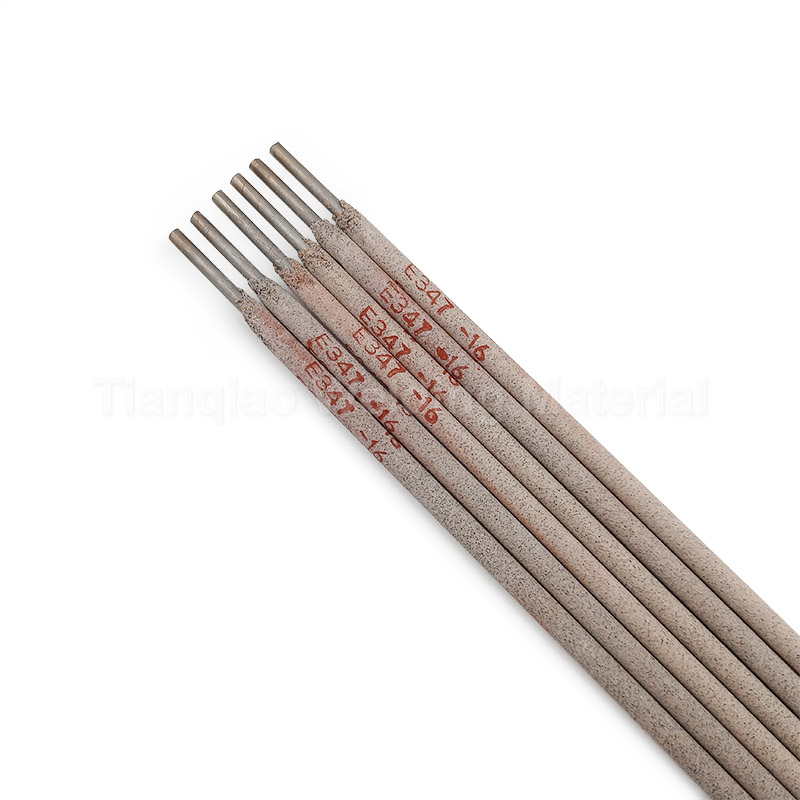
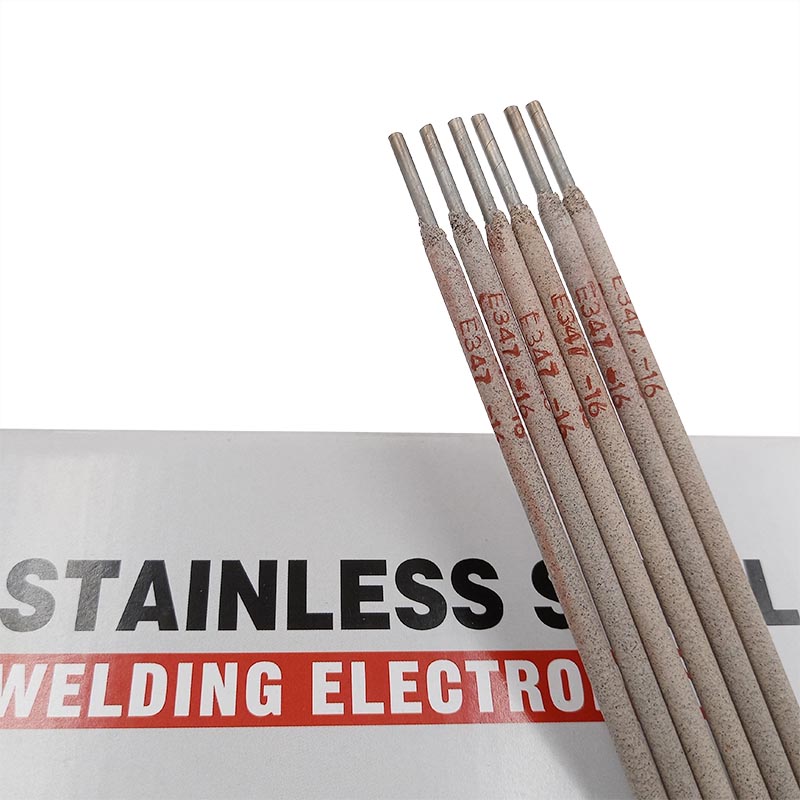
E347-16 is a rutile-coated stainless steel electrode containing niobium stabilizer. Its weld metal has good mechanical properties and resistance to intergranular corrosion, and the weld has better crack resistance. It can be used for both AC and DC, the arc blowing force of the welding rod is large, and the comprehensive process performance of horizontal and vertical welding is excellent. In particular, the welding performance in all positions is better, the welding seams are beautifully formed, and the electrode coating is not prone to redness. The welding rod coating has good strength.

Product Description

CHARACTERISTICS
E347-16 is a rutile-coated stainless steel electrode containing niobium stabilizer. Its weld metal has good mechanical properties and resistance to intergranular corrosion, and the weld has better crack resistance. It can be used for both AC and DC, the arc blowing force of the welding rod is large, and the comprehensive process performance of horizontal and vertical welding is excellent. In particular, the welding performance in all positions is better, the welding seams are beautifully formed, and the electrode coating is not prone to redness. The welding rod coating has good strength.
APPLICATION
Used for welding important Cr18Ni11 corrosion-resistant stainless steel containing titanium or niobium stabilizer, such as 06Cr18Ni11Ti, 06Cr18Ni11Nb, etc.
ATTENTION
  • The electrode must be baked at 300~350℃ for 1~2 hours before welding, and can be used immediately after baking.
  • Use DC reverse connection as much as possible, because when using AC welding, the penetration will be shallow.
  • Try to use small current and short arc when welding, and the swing width should not exceed 2.5 times the diameter.
  • Oil, water and other impurities must be removed from the welded parts before welding.
DEPOSIT COMPOSITION (Quality Score): %
Items C Mn Si P S Ni Cr Mo Cu Nb+Ta
Standard ≤0.08 0.5-2.5 ≤1.00 ≤0.04 ≤0.03 9.0-11.0 18.0-21.0 ≤0.75 ≤0.7 8×C-1.00
Typical Results 0.042 0.95 0.86 0.027 0.012 9.50 19.95 0.035 0.020 0.56
MECHANICAL PROPERTIES
Items Tensile strength Rm(Mpa) Elongation (%)
Standard ≥520 ≥25
Typical Results 650 38
TYPICAL OPERATING PROCEDURES: (AC, DC+)
Diameter (mm) 2.5 3.2 4.0
Current (A) 50-70 70-100 90-135
PACKAGING & SERVICE
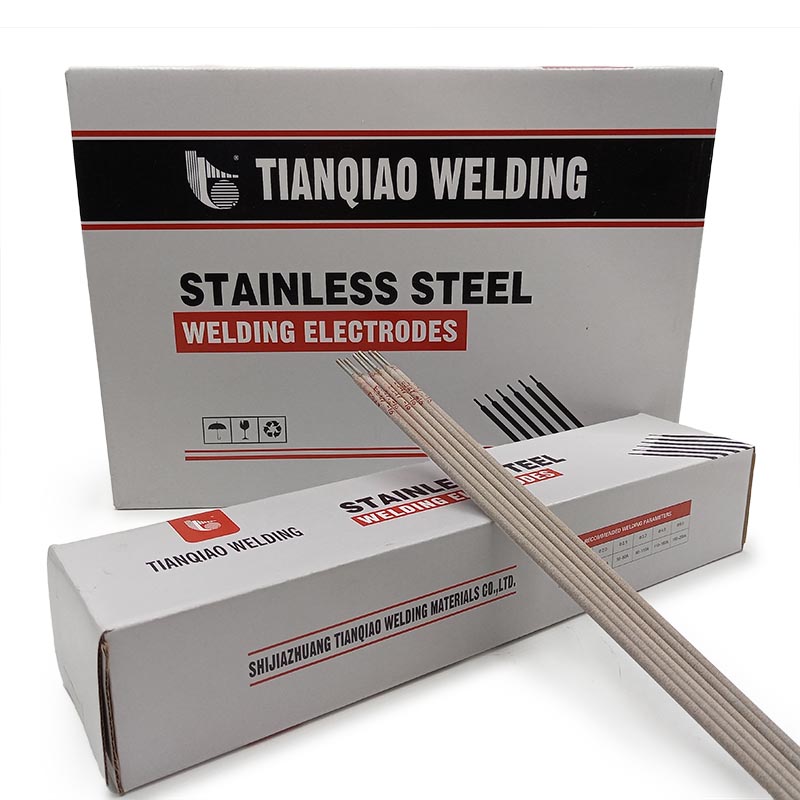
Standard Packaging: 5kg/box, 4boxes/carton, 20kgs/carton, 50cartons/pallet. 21MT - 26MT per 1X20″ FCL.
OEM/ODM: We support OEM/ODM and could make packaging according to your design.
RULE INSPECTION
Welding parts are inspected by the quality inspection department. For welds requiring radiographic testing, the length should not be less than 20% of the full length. If impermissible defects are found, supplementary testing is performed near the defect. For important parts, appearance and geometric dimensions are inspected one by one. Non-destructive testing or sealing tests are carried out in accordance with technical requirements.
Tips for E347-15 / E347-16 Selection

Selection Guide: If the equipment supports DC reverse connection and requires high toughness/crack resistance, E347-15 is preferred. If AC/DC dual-use or all-position welding is required, E347-16 is recommended for better processability and stable forming.

E347-15 Scenarios: Chemical containers, high-temp pipelines. Requires 350℃×1h drying, DC reverse connection, and layer temperature ≤150℃.

E347-16 Scenarios: On-site maintenance and complex positions. Performs well with AC welding, resistant to redness and cracking.
FAQ
1. What is the main difference between E347-15 and E347-16?
E347-15 is preferred for DC reverse connections and high-toughness requirements, while E347-16 supports both AC and DC, offering better processability for all-position welding.
2. What are the baking requirements for E347-16 electrodes?
Electrodes must be baked at 300~350℃ for 1~2 hours before welding and used immediately after baking.
3. Which materials can be welded with these electrodes?
They are designed for welding Cr18Ni11 corrosion-resistant stainless steels containing titanium or niobium, such as 06Cr18Ni11Ti and 06Cr18Ni11Nb.
4. Why is DC reverse connection recommended?
DC reverse connection provides better penetration depth, whereas AC welding might result in a shallower penetration.
5. What inspection standards are followed for the welds?
Inspections include appearance, geometric dimensions, and radiographic testing (minimum 20% of length for critical welds) along with non-destructive tests where required.
6. Can I request customized packaging?
Yes, we support OEM/ODM services and can provide packaging according to your specific design requirements.

Related Products