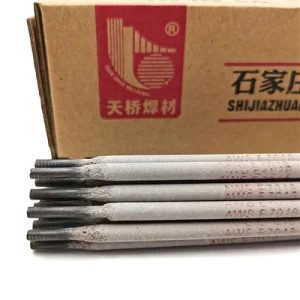
OEM Welding Joint Supplier & Factory

Decentralized High-Performance Metallurgy & Precision-Engineered Electrodes for Structural Integrity & Critical Welding Applications Worldwide

Shijiazhuang Tianqiao Welding Materials Co., Ltd.

Founded in 2007, Shijiazhuang Tianqiao Welding Materials Co., Ltd is an established force in high-durability welding consumable manufacturing.

Strategically situated 30 kilometers southwest of Shijiazhuang, our operations boast optimal transport accessibility, laying just 20 kilometers west of the 107 National Highway, and near the Shixing and Jingzan Highways. This prime logistic placement ensures that domestic and international global cargo dispatches proceed seamlessly.

Our core capabilities are driven by a robust technical force, state-of-the-art testing equipment, and structured organizational departments including Production, Technical, R&D, QC & Laboratory, Sales, and Logistics. We hold ourselves to strict quality assurance parameters, maintaining ISO certifications to guarantee consistent metallurgical uniformity across every batch of electrodes and wires.
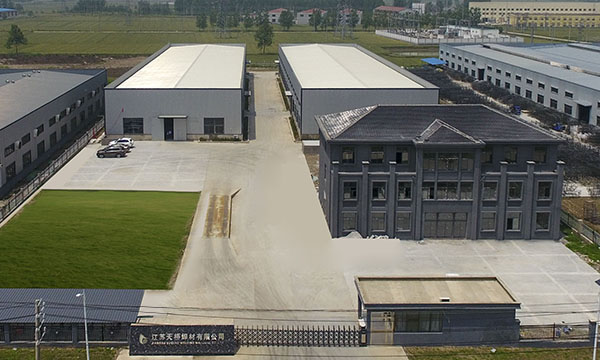
Shijiazhuang Tianqiao Factory Area
2007
Year of Establishment
100%
Exported Worldwide
50+
Global Trade Partner Countries
20k+
Annual Tons Capacity

Engineering High-Performance Weld Joints

Understanding the chemical mechanics and metallurgical processes behind structural weld integrity.

Metallurgical Chemistry

Optimum joint integrity requires tight control over chemical compositions. The inclusion of precise levels of manganese, silicon, and micro-alloys controls grain refinement, prevents porosity, and ensures that weld seams withstand severe mechanical stress under cold or high-vibration conditions.

Flux Formulations

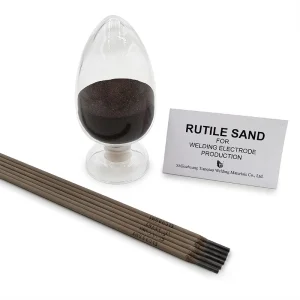
Flux plays a double role: protecting the molten pool from oxygen and nitrogen ingress while stabilizing the electric arc. Using premium China Rutile Sand guarantees stable arcs, minimal spatter, and self-peeling slag characteristics, resulting in smooth profiles.

Crack Prevention Mechanisms

Low hydrogen formulas block moisture-induced cracking, which is a major concern when joining thick, high-tensile steel plates. High-purity core wires, paired with calibrated baking procedures, ensure ultra-low diffusible hydrogen levels, protecting structures against cold cracking.

Deep Dive: Core Brands & Metallurgical Classifications

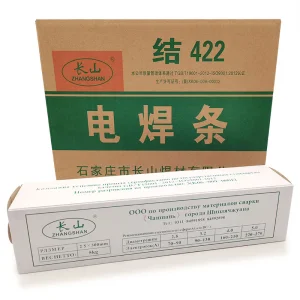
Our proprietary brands, "Yuanqiao" and "Changshan", encompass a comprehensive spectrum of welding electrodes designed for diverse steel classifications:

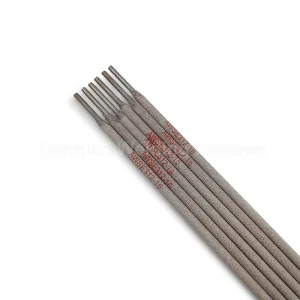
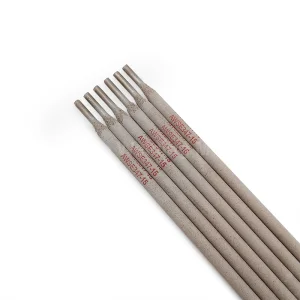
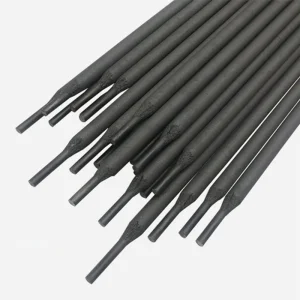
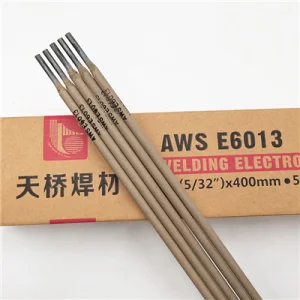
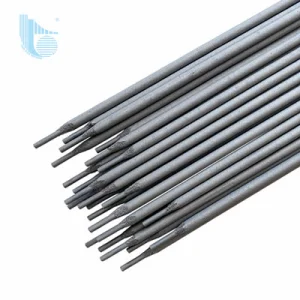
  • Low Carbon Steel Electrodes: Rutile and cellulose-coated electrodes (such as AWS E6013 and AWS E7024) optimized for ease of use, excellent bead appearance, and reliable performance on light structural profiles.
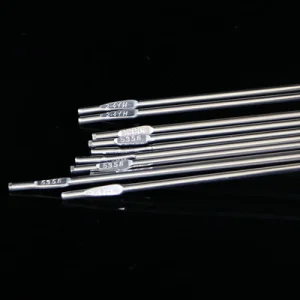
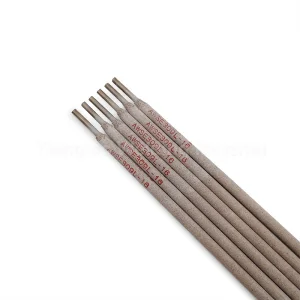
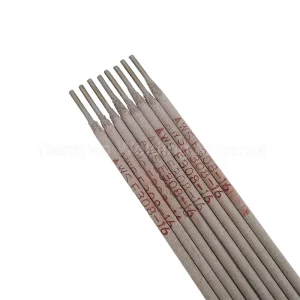
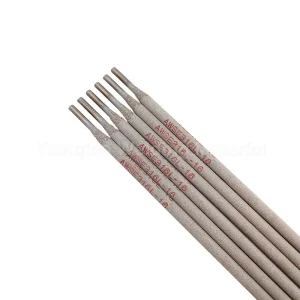
  • Stainless Steel & Heat-Resistant Formulations: Including specialized AWS E308-16, E309L-16, E312-16, and E347-15 grades. These are designed to preserve corrosion resistance across the heat-affected zone (HAZ) while preventing carbon precipitation.
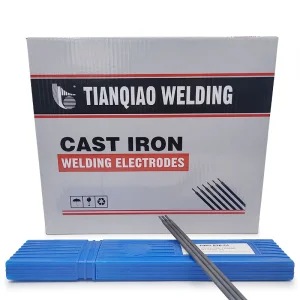
  • Cast Iron & Reclamation Rods: Pure nickel cores (AWS ENi-Cl / Z308) provide superior machinability and crack-free joins when working with complex grey cast iron or spheroidal graphite castings.
  • Hard Surfacing & Wear-Resistant Rods: Rods like D608 and D256 are engineered to lay down high-hardness martensitic structures, preventing abrasive wear in mineral processing, dredging, and earthmoving buckets.

Global Procurement & Industrial Applications

Adapting to the rigorous supply chain and technical demands of major industrial buyers across continents.
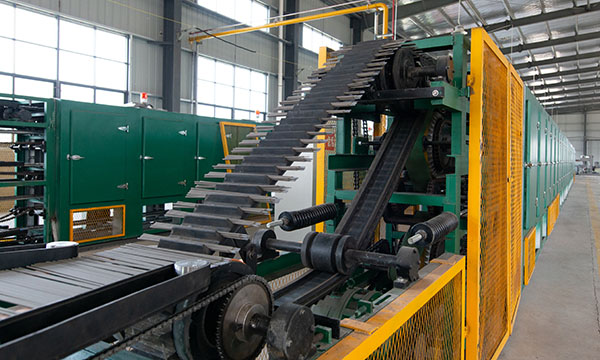
Industrial Welding Applications

Serving Critical Macro Industries

Tianqiao's specialized consumables serve critical applications in numerous global markets:

  • Pressure Vessels & Boilers: Requires high ductility and radiographic-sound welds capable of containing high temperatures and pressures.
  • Shipbuilding & Marine Structures: Demands saltwater corrosion resistance and high-deposition rates under humid coastal yards.
  • Civil Construction & Heavy Infrastructure: Relies on seismic-resilient weld metal properties capable of absorbing cyclic mechanical loads.
  • Petrochemical Piping: Prefers chromium-nickel alloyed consumable designs that prevent oxidation and hot cracking.

With 100% of our production dedicated to international markets (including the USA, Europe, South America, Australia, Africa, the Middle East, and Southeast Asia), we understand the logistical and regulatory complexities of importing heavy bulk consumables.

Localization, Logistics & Compliance

Managing global supply lines requires strict compliance with international welding codes. Every batch of Tianqiao products is tracked with Batch Test Certificates (3.1/3.2) detailing metallurgical analysis and physical performance tests.

We work closely with localized distributors to align with regional standards—such as AWS (American Welding Society), JIS (Japanese Industrial Standards), and DIN (German Institute for Standardization). We offer custom packaging, moisture-resistant shrink wraps, and sealed plastic spools to safeguard the shelf-life of welding wire during ocean transit.

Innovation Roadmap (2025–2030)

As mechanical industries shift towards automated fabrication, Tianqiao is investing in next-generation solid and flux-cored wire production. Our engineering R&D team is focused on:

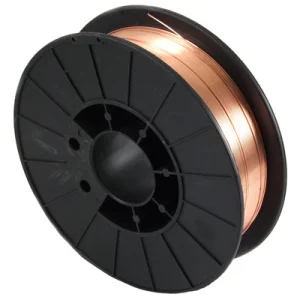
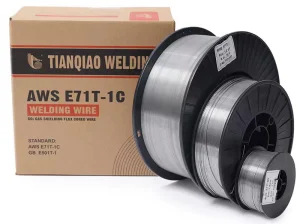
  • Robotic Wire Optimization: Developing premium copper-coated and flux-cored wires (like AWS ER80S-G and E71T-1C) that exhibit zero tangle feeding at high-duty cycles.
  • Manganese Reduction Technology: Formulating new rutile-sand flux combinations that emit significantly lower manganese fumes, improving safety for indoor welders.
  • Nano-Engineered Coatings: Incorporating minor grain-refining additives to enhance impact toughness at sub-zero temperatures down to -60°C.

Technical FAQ & Engineering Troubleshooting

Expert solutions addressing common challenges in high-spec structural welding joints.

Q1: What are the primary causes of hot cracking in stainless steel weld joints, and how do we prevent it? +
Hot cracking, or solidification cracking, is common in fully austenitic stainless steel structures. It happens when low-melting-point eutectic phases separate at the grain boundaries during cooling. To prevent this, our AWS E312-16 and E309L-16 electrodes are formulated to produce a small percentage of delta-ferrite (typically 3 to 10 FN) in the weld metal. Delta-ferrite dissolves harmful impurities like sulfur and phosphorus, preventing them from collecting at the grain boundaries.
Q2: When should AWS E7024 be selected over standard rutile E6013 electrodes? +
AWS E7024 is a high-deposition, iron-powder electrode designed for flat and horizontal fillet welds. Thanks to the iron powder in the flux coating, E7024 yields recovery rates up to 140%, speeding up productivity compared to standard E6013. However, E6013 is more versatile for all-position welding, including vertical-up and overhead configurations.
Q3: How does the quality of Rutile Sand impact the overall performance of welding electrodes? +
Rutile sand contains natural Titanium Dioxide (TiO2). High-purity rutile stabilizes the electric arc, facilitates smooth weld metal transfer, and produces a highly fluid slag that solidifies quickly. Low-quality rutile sand often carries elevated levels of iron oxide and silica impurities, which destabilize the arc and cause spatter, slag inclusions, and porosity.
Q4: What is the optimal pre-heating temperature profile for cast iron repairs using Z308 pure nickel rods? +
Pure nickel Z308 (EZNi-1) can be welded cold (room temperature), but pre-heating the cast iron component to 150°C - 200°C reduces residual stress and prevents cracking in the heat-affected zone. Weld beads should be short (20-30mm) and peened immediately after welding to relieve shrinkage stresses.
Q5: Why is copper coating essential on solid MIG/TIG wires like ER80S-G? +
The copper coating serves two purposes: protecting the wire from atmospheric corrosion during storage and ensuring good electrical contact in the welding torch. This contact reduces arc chatter and tip wear. Our drawing process guarantees a uniform copper layer that won't flake off and clog the torch liner.
Q6: How does gas shielding on flux-cored wire E71T-1C protect high-stress joints? +
AWS E71T-1C uses a combination of inner flux core protection and external CO2 gas shielding. This dual protection completely isolates the weld pool from nitrogen and oxygen, even when welding outdoors in mild wind. The result is a clean weld structure with excellent mechanical properties, making it a reliable choice for structural steel fabrication and shipyards.