Our initial tier of hardfacing and repair consumables is selected for high-impact resistance, structural build-ups, and surface protection in heavy tropical maritime environments.
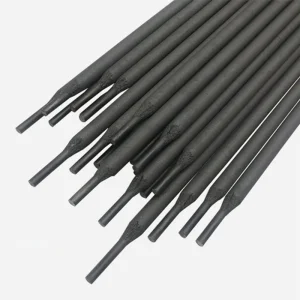
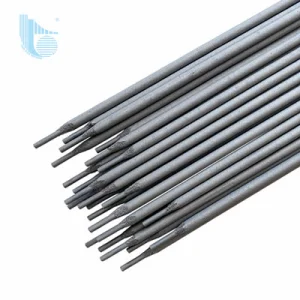
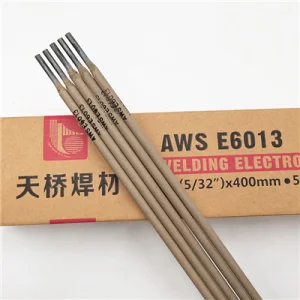
Trinidad and Tobago stands as one of the most industrialized nations in the Caribbean, anchored by the massive petrochemical clusters of the Point Lisas Industrial Estate, LNG production facilities in Point Fortin, and extensive marine commerce across the Port of Spain and Chaguaramas. Operating heavy machinery in this tropical, high-salinity marine environment accelerates structural wear, necessitating superior surfacing (hardfacing) solutions.
From dredging equipment processing coastal sands to high-temperature piping systems in natural gas fractionation, standard alloys succumb rapidly to corrosion and abrasion. Local enterprises rely on hardfacing technologies to reclaim eroded machine components, extend the life of agricultural harvesters in the sugarcane and clay-processing zones, and ensure the integrity of structural marine elements.
By delivering high-alloy surfacing welding rods directly to local distributors and industrial projects, Shijiazhuang Tianqiao Welding Materials Co., Ltd. satisfies the urgent engineering demand for wear-resistant overlays that withstand severe impact, sliding abrasion, and chemical erosion.
Hardfacing is not merely about welding; it is about managing alloy dilution, heat input, and microstructure phase transformations. Our products are formulated to ensure optimal deposition properties.
For alloys like D608, chromium-carbide precipitates form within a tough matrix, providing supreme resistance to low-stress scratching abrasion under moderate impact conditions typical of mining and quarrying chute liners.
The D256 (AWS EFeMn-A) manganese electrode is designed for components experiencing severe impact. Under impact stress, the austenitic matrix transforms on the surface, hardening from 200 HB to over 500 HB without fracturing.
Reclaiming fluid control valves, shafts, and impellers requires precise chromium-silicon-manganese weld deposits (such as D507) that resist cavitation, marine atmospheric corrosion, and temperatures up to 450°C.
Established in 2007, Shijiazhuang Tianqiao Welding Materials Co., Ltd. combines advanced chemical synthesis with certified manufacturing practices to supply global markets.
In humid coastal zones like Point Lisas and Chaguaramas, wear processes do not occur in isolation. Rather, components suffer from a phenomenon known as corrosive wear or tribo-corrosion. When abrasive particles remove the oxide layer of exposed carbon steels, the marine atmosphere accelerates oxidation, leading to a cycles of rust-peel-abrade. Standard carbon steel weld deposits fail rapidly under these conditions.
Deploying specialized surfacing alloys establishes a barrier. For instance, chromium-rich carbides inhibit direct corrosion due to chromium's passive oxide-forming properties, while simultaneously blocking mechanical wear via high microhardness. In the maintenance of steam valves, turbine rotors, and petrochemical mixer shafts, hardfacing layers act as sacrificial yet highly durable barriers, preventing base-metal decay and extending service periods by up to 300%.
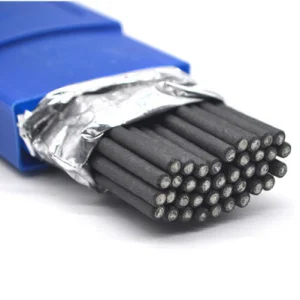
Given the high humidity of the Caribbean basin, moisture control is crucial for low-hydrogen and alloyed electrodes. Shijiazhuang Tianqiao Welding Materials Co., Ltd. implements hermetically sealed vacuum foil packaging. This eliminates ambient moisture absorption before opening, reducing risk of hydrogen-induced cracking (HIC) during critical onsite repairs at drilling fields or marine terminals.
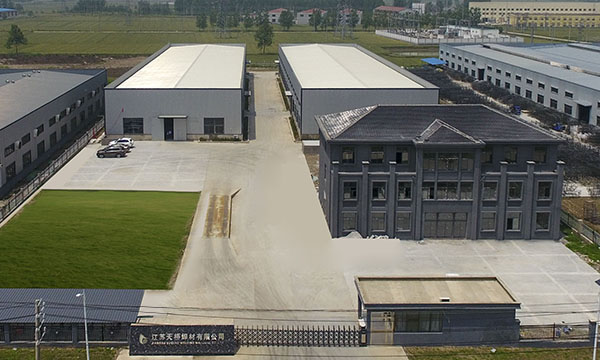
Shijiazhuang Tianqiao Welding Materials Co., Ltd. was founded in 2007 and is situated 30 kilometers southwest of Shijiazhuang. Our facility offers convenient transit routes, located just 20 kilometers west of the 107 National Highway, and adjacent to the Shixing and Jingzan Highways. Backed by strong technical expertise and complete product testing infrastructure, we ensure stable chemical compositions and mechanical output. The corporate structure spans dedicated departments for production, technical analysis, R&D, Quality Control/Laboratory, sales, and logistics.
Under our proprietary brands "Yuanqiao" and "Changshan", we manufacture low carbon steel electrodes, low alloy steel, heat-resistant and low-temperature steel rods, stainless steel, cast iron, and hard surfacing welding electrodes. Our capabilities extend to high-purity sintered fluxes, GMAW/FCAW wires, and customized welding powders. All products feature excellent welding performance, uniform slag release, high crack resistance, and stable mechanical properties.
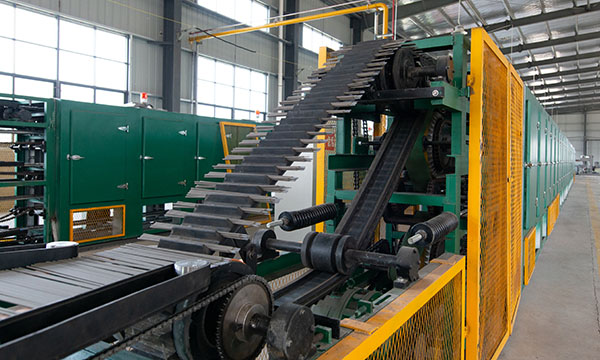
Our solutions serve diverse fields including heavy machinery fabrication, metallurgy, petrochemical plants, high-pressure boilers, pressure vessels, maritime shipbuilding, and structural civil engineering projects.
Our products are 100% exported and distributed globally. Major markets include the United States, Europe, South America, Australia, Africa, the Middle East, Southeast Asia, and developing industrial corridors in the Caribbean.
Embodying our core philosophy of "Supreme Quality, Honesty, and Win-Win Cooperation," we focus on shared progress and sustainable commercial growth with global partners and distributors.
Common technical questions regarding selection, application, and storage of surfacing welding consumables in coastal industrial zones.
Dilution refers to the mixing of the base metal alloy with the deposited welding consumable alloy. If dilution is too high, the hardness and wear resistance of the surfacing deposit will be reduced because the base metal (typically lower carbon or mild steel) dilutes the chromium, manganese, or cobalt alloy concentration. To control dilution, use the lowest practical welding current, hold a short arc length, and consider a multi-layer weld deposit (usually two to three layers) to obtain the maximum hardness profile on the working surface.
D608 is a chromium-carbide hardfacing electrode that achieves high hardness (HRC 55+) in its as-deposited state. It is ideal for wear caused by fine sand, gravel, and sliding mineral abrasion. D256 is an austenitic high-manganese steel rod. Its initial hardness is low, but it work-hardens rapidly under strong impact stresses (e.g., under dynamic crushing jaws or rail frogs) up to HRC 50+. D608 is chosen for high-abrasion/low-impact contexts, whereas D256 is selected for high-impact/moderate-abrasion settings.
Preheating depends on the carbon equivalent (CE) of the base metal. For typical medium-carbon steel bases, preheating to 150°C - 250°C is standard to prevent cold cracking in the heat-affected zone (HAZ). For high-manganese steels, however, preheating should be avoided, and interpass temperatures must be kept below 100°C to prevent carbide precipitation at grain boundaries, which causes embrittlement.
No. Surfacing alloys are highly sensitive to carbon and hydrogen pickup from contaminants. Oil, grease, rust, and moisture must be removed by grinding or solvent cleaning prior to welding. Contaminants introduce hydrogen, causing porosity, voids, and underbead cracking that will compromise the performance of the wear layer.
They should be stored in dry, temperature-controlled warehouses with relative humidity below 60%. Once packages are opened, basic-coated and hardfacing electrodes should be kept in holding ovens at 100°C - 150°C before use. If exposed to air for extended periods, they must be rebaked according to the technical data sheet (typically 300°C - 350°C for 1-2 hours) to remove absorbed moisture.
Flux-cored wires offer higher deposition rates, continuous welding capabilities (minimizing stop-start defects), and better penetration. For large surface area rebuilds, such as excavator buckets or mill rollers, FCAW is more cost-effective due to reduced cycle times. However, SMAW (stick rods) remains the preferred method for localized field repairs and hard-to-reach locations.
A buffer layer is an intermediate layer of ductile weld metal (e.g., low-alloy or stainless steel) applied between the base metal and the hardfacing overlay. It is necessary when the base metal is highly alloyed or susceptible to cracking, when rebuilding deeply worn components, or when applying a high-hardness overlay that cannot tolerate high stress concentration. The buffer layer absorbs stress and prevents cracks from propagating into the base metal.
Yes. Through our specialized R&D department and laboratory, we can adjust chemical composition, chromium content, and alloy percentages to match specific wear environments or direct procurement specifications for large-scale industrial projects.
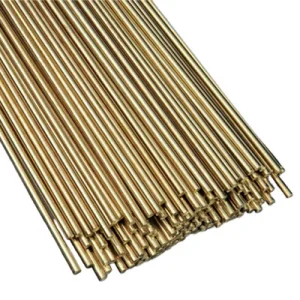
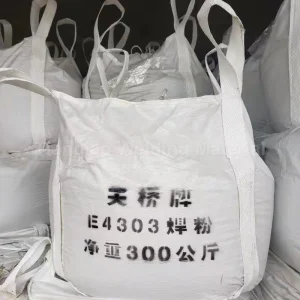
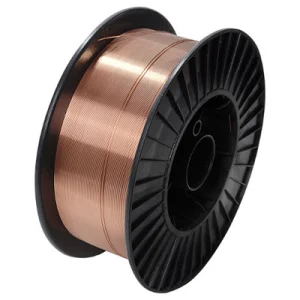
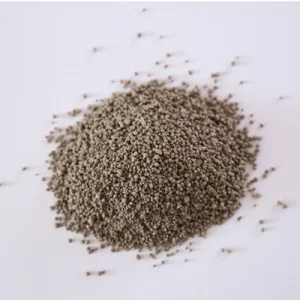
Explore our secondary line of structural welding consumables, flux-cored wires, non-ferrous alloys, and submerged arc components engineered for global compliance.
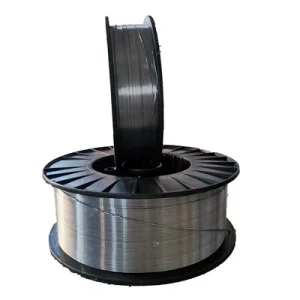
Discuss your application wear mechanisms with our metallurgy team. We offer customized packaging, volume discount profiles, and port-to-port logistics for Trinidad and Tobago.
Send Inquiry Now Tianqiao Welding