China Top 10 Welding Rod Manufacturers

Time:2026-11-07 Author:Madeline
0%

Choosing among China’s welding rod manufacturers requires more than comparing prices or browsing polished product catalogs. A dependable supplier should offer clear specifications, consistent production controls, and technical support that matches the intended application. Small details matter. Coating condition, rod diameter, packaging, and storage guidance can all affect handling and weld quality.

This guide introduces ten manufacturers for buyers researching the China Welding Rod market. It considers practical factors such as product range, manufacturing capabilities, quality documentation, export experience, and responsiveness to technical questions. These points can help readers build a shortlist, but they are not a substitute for reviewing current records or testing samples. A company’s published claims should be checked against relevant certificates, product data sheets, and the buyer’s own requirements.

The right choice depends on the work involved. A workshop repairing steel structures may need different electrode types from a fabricator producing equipment in repeat batches. Ask suppliers about base-metal compatibility, recommended welding positions, storage conditions, and available inspection reports. Requesting a sample can reveal useful details that a brochure cannot. Still, supplier information may be incomplete, and comparisons are not always straightforward. That limitation deserves attention. Use the profiles as a starting point, then confirm specifications, service expectations, and delivery terms directly with each manufacturer before making a purchasing decision.
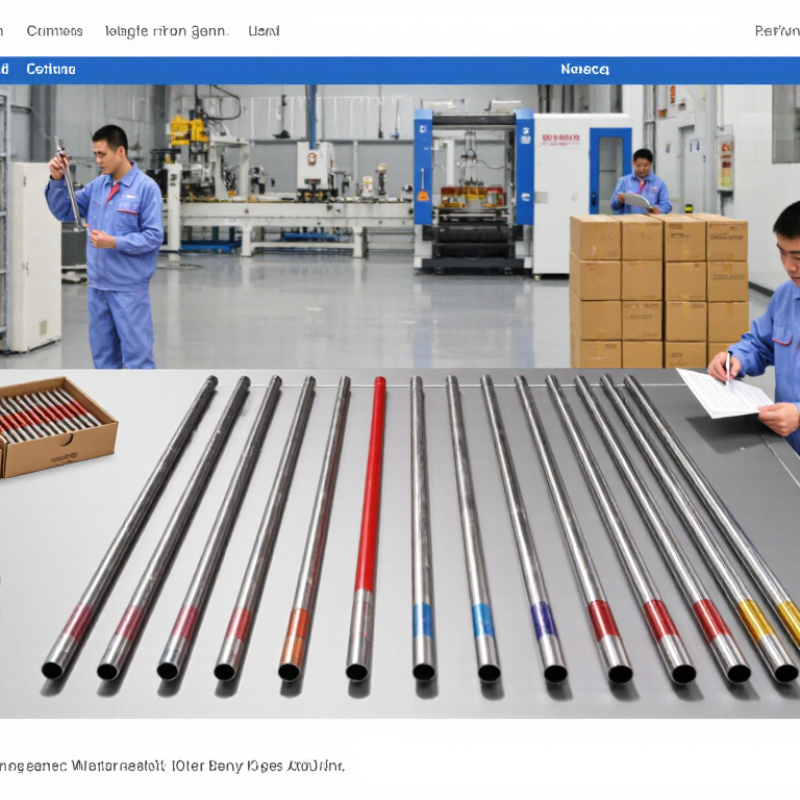
China Top 10 Welding Rod Manufacturers

China’s Welding Rod Industry: Product Types and AWS A5.1 Classifications

China’s welding rod industry supplies covered electrodes for structural steel, machinery repair, shipbuilding, and general fabrication. Common product families include rutile, cellulose, low-hydrogen, and iron-powder electrodes. Each coating affects arc behavior, slag removal, and moisture sensitivity. That matters on the shop floor. A damp electrode can cause porosity or hydrogen-related cracking, especially in demanding joints.

AWS A5.1 classifies covered carbon-steel electrodes by performance and usability. In E7018, “E” means electrode, “70” indicates a minimum tensile strength of 70,000 psi, and “1” denotes all-position use. The final “8” identifies a low-hydrogen, iron-powder coating and specified current options. E6013 is often chosen for a smooth arc and lighter slag, while E6010 is associated with deep penetration and DC operation. These are not interchangeable choices.

Check the full classification, packaging condition, and application requirements before comparing products. Base-metal chemistry, joint design, position, and welding procedure all matter. A familiar code helps, but it does not guarantee a suitable result. Even experienced buyers can overfocus on tensile strength and overlook handling or storage. Temperature and humidity deserve attention too.

How to Assess the Top 10 Manufacturers: Scale, Certifications, and Export Reach

A reliable assessment of China’s leading welding rod manufacturers should begin with production scale, not impressive factory photographs. Ask for annual output, typical order size, and lead times during peak seasons. Then compare these figures with equipment capacity and staffing across shifts. A large facility is useful only if quality remains consistent.

Look for documented quality systems and certificates whose validity and scope can be checked. The paperwork should match the products being evaluated. Ask how each batch is traced, from incoming wire and coating materials to final packaging. Test reports should identify the sample, method, and results—not just display a passing mark. Small details matter. A certificate alone cannot show how a factory handles a coating defect or an unexpected production delay.

Export reach needs evidence, too. Review destination markets, shipment records, packaging methods, and the manufacturer’s experience preparing export documents. Ask whether moisture-resistant packaging is available for long sea routes, and how damaged cartons are handled. A broad export network may indicate experience, but it does not guarantee prompt service in every region. Rankings can simplify comparisons. They can also hide gaps, especially when public data is limited or outdated. Verify key claims directly, and treat unclear answers as a reason to investigate further.

China’s Welding Rod Manufacturers: A Practical Assessment Framework

Suggested weighting for comparing manufacturers by production scale, certifications, and export reach. These are framework weights, not measured scores or rankings of specific companies.

How to use it: Compare documented production capacity and facilities, verify relevant quality and product certifications, and check export markets and shipment experience. Apply the same evidence standards to every manufacturer.

Top 10 Chinese Welding Rod Manufacturers: Profiles and Product Portfolios

China Top 10 Welding Rod Manufacturers: Profiles and Product Portfolios

China’s welding rod suppliers serve construction, shipbuilding, machinery, and steel fabrication. World Steel Association data puts China’s crude steel output at 1,019.1 million tonnes in 2023. That scale helps explain demand for dependable consumables, but it does not prove every supplier offers the same quality. A useful top-ten profile compares product range, classification, testing documentation, and consistency between batches.

Portfolios commonly include rutile and basic electrodes for carbon steel, low-alloy rods, stainless-steel electrodes, and specialist options for hardfacing or cast iron. Some manufacturers also supply submerged-arc wire and flux, alongside MIG and TIG wires. Check stated classifications against standards such as ISO 2560, then compare diameter options, recommended current ranges, and packaging. A clear datasheet matters. So does evidence from actual production trials.

The market context is expanding: Grand View Research estimated the global welding consumables market at USD 16.2 billion in 2023 and projected a 4.7% compound annual growth rate from 2024 to 2030. Such forecasts indicate demand, not supplier performance. Catalogs can look complete; shop-floor consistency is harder to judge. Profiles should therefore distinguish broad portfolios from verified application experience, while noting that publicly available technical details may be uneven.

China Top 10 Welding Rod Manufacturers - Top 10 Chinese Welding Rod Manufacturers: Profiles and Product Portfolios

Representative, non-ranked product portfolio profiles. Company names, brands, and company-specific claims are intentionally omitted; the entries describe recognized electrode classifications and common applications, not verified portfolios of individual manufacturers.

Portfolio Profile Representative Classification Electrode Type Typical Characteristics Common Applications Relevant Classification Standard
Carbon Steel — General Purpose E6013 Rutile-type covered electrode Designed for general fabrication; commonly used with AC or DC power sources. Consult the product datasheet for approved positions and polarity. Light structural work, sheet metal, maintenance, and general-purpose carbon-steel welding. AWS A5.1 / ASME SFA-5.1
Carbon Steel — Low Hydrogen E7018 Low-hydrogen iron-powder electrode Low-hydrogen classification; handling and storage instructions are important to limit moisture pickup. Commonly used with AC or DC. Structural steel, restrained joints, and fabrication where low-hydrogen consumables are specified. AWS A5.1 / ASME SFA-5.1
Carbon Steel — Cellulosic, DC E6010 High-cellulose sodium-type electrode Typically operated on DCEP; known for a forceful arc and suitability for root-pass work when procedures permit. Pipe welding, root passes, and field welding of carbon steel. AWS A5.1 / ASME SFA-5.1
Carbon Steel — Cellulosic, AC-Compatible E6011 High-cellulose potassium-type electrode Designed for AC or DCEP operation; often selected for field work and less-than-ideal surface conditions, subject to procedure requirements. Maintenance, repair, and general field welding of carbon steel. AWS A5.1 / ASME SFA-5.1
Carbon Steel — High Deposition E7024 Iron-powder, high-deposition electrode Designed primarily for flat-position welding and horizontal fillet welds; the iron-powder coating supports high deposition rates. Long welds and production fillet welding on suitably positioned carbon-steel components. AWS A5.1 / ASME SFA-5.1
Stainless Steel — 18Cr-8Ni Family E308L-16 Low-carbon austenitic stainless-steel electrode The “L” indicates a low-carbon classification. Selection should match the base-metal grade, service environment, and qualified welding procedure. Commonly used for welding compatible 304L-type stainless steels. AWS A5.4 / ASME SFA-5.4
Stainless Steel — Dissimilar-Metal Joining E309L-16 Low-carbon austenitic stainless-steel electrode Provides a higher-alloy weld metal than 308L classifications; confirm suitability for the specific dissimilar-metal joint and service conditions. Common applications include joining stainless steel to carbon or low-alloy steel and welding certain clad materials. AWS A5.4 / ASME SFA-5.4
Stainless Steel — Molybdenum-Bearing Family E316L-16 Low-carbon, molybdenum-bearing austenitic stainless-steel electrode Used where the matching 316L-type weld metal is specified; corrosion performance depends on the alloy, environment, and fabrication practice. Welding compatible 316L-type stainless steel in chemical, food-processing, and related equipment. AWS A5.4 / ASME SFA-5.4
Duplex Stainless Steel E2209-16 Duplex stainless-steel electrode Designed for matching or compatible duplex stainless-steel applications. Heat input and interpass temperature should follow the qualified procedure. Welding compatible 2205-type duplex stainless steel in process, marine, and energy equipment. AWS A5.4 / ASME SFA-5.4
Nickel Alloy — Nickel-Chromium-Iron ENiCrFe-3 Nickel-alloy covered electrode Nickel-chromium-iron weld-metal classification; verify compatibility with the base alloy, service conditions, and applicable procedure. Joining or repairing specified nickel-chromium-iron alloys and selected dissimilar-metal joints. AWS A5.11 / ASME SFA-5.11

Classification references identify electrode requirements; they do not establish a particular manufacturer’s product range. Confirm the exact classification, welding position, current, polarity, storage requirements, and application limits against the applicable standard, product certificate, and manufacturer’s technical datasheet.

E7018 Benchmark: 70 ksi (483 MPa) Minimum Tensile Strength

When comparing China’s top 10 welding rod manufacturers, treat E7018’s 70 ksi (483 MPa) minimum tensile strength as a measurable benchmark, not a marketing shortcut. This value applies to deposited weld metal under specified test conditions. It does not guarantee that every finished joint will reach the same strength.

Ask for recent test reports and traceable batch records. Check whether results identify the electrode classification, test method, and specimen condition. Details matter.

In a workshop, an operator may notice damp coating, unstable arc behavior, or excess spatter before a certificate reveals a problem. E7018 is a low-hydrogen electrode, so storage and handling instructions deserve close attention. Moisture control can affect weld quality, even when the stated strength meets the classification minimum.

A sound comparison also considers consistency between batches, packaging condition, and technical support for application questions. Confirm compatibility with the base metal and welding procedure; strength alone is not enough.

The 70 ksi threshold is a useful starting point, but it leaves questions about toughness, usability, and inspection results. Those are worth checking, too. A small sample weld, reviewed by a qualified technician, can expose practical issues that a polished product sheet may miss.

Applications and Selection: Matching Electrode Class to Base Metal and Process

Choosing a welding rod starts with the base metal, not the shelf label. For mild steel, E6010 offers deep penetration and a fast-freezing puddle, useful on open-root joints and vertical-down work. E6011 can suit similar jobs where AC power is needed. Thin sheet often benefits from E6013’s gentler arc and lighter penetration, which can help limit burn-through. Fit matters.

For thicker carbon-steel joints, E7018 is a common low-hydrogen choice when strength and crack control matter. Keep these electrodes dry as their product instructions require; damp rods can add porosity and undermine weld quality. Stainless steel needs an electrode selected for the alloy and service conditions, while cast iron often calls for nickel-based electrodes and careful heat management. A familiar class is not automatically the right match.

The power source and joint position narrow the options further. Check whether the electrode supports AC or DC, and confirm the required polarity and usable positions on its classification or data sheet. A rod that runs smoothly on a bench may behave differently overhead or in a tight root gap. Test on a representative coupon, inspect the bead and fusion, and compare results with the qualified welding procedure. I still find fit-up can matter more than expected.

FAQS

What does the E7018 classification indicate?

“E” means electrode, and “70” indicates minimum tensile strength of 70,000 psi. “1” means all-position use. The final “8” identifies a low-hydrogen, iron-powder coating with specified current options.

How do E6013 and E6010 differ?

E6013 offers a smoother arc and lighter slag, making it useful for lighter work. E6010 provides deeper penetration and is associated with DC operation. They are not interchangeable.

Which electrode may suit thin steel sheet?

E6013’s gentler arc and lighter penetration can help reduce burn-through on thin sheet. Fit matters. Check the joint and procedure before choosing.

When is E7018 a common choice?

E7018 is often used for thicker carbon-steel joints when strength and crack control matter. Keep these electrodes dry as their product instructions require.

What should I consider for stainless steel or cast iron?

Match stainless electrodes to the alloy and service conditions. Cast iron often calls for nickel-based electrodes and careful heat management. A familiar class is not automatically suitable.

How do power source and position affect electrode choice?

Confirm AC or DC compatibility, polarity, and usable positions on the classification or data sheet. A rod that runs well on a bench may behave differently overhead.

What should I check before comparing electrodes?

Review the full classification, package condition, base-metal chemistry, joint design, and welding procedure. Temperature and humidity matter too. A code does not guarantee a suitable result.

How can I check whether an electrode suits the job?

Test it on a representative coupon, then inspect the bead and fusion against the qualified procedure. I still find fit-up can matter more than expected.

Conclusion

China Welding Rod manufacturers serve a broad range of joining needs, offering electrodes suited to different base metals, welding positions, and processes. Understanding common product types and AWS A5.1 classifications helps buyers compare options and identify electrodes with the characteristics required for a particular job. A careful assessment of manufacturers should consider production capacity, quality certifications, product consistency, and export experience rather than relying on a single factor.

E7018 provides a useful benchmark, with a minimum tensile strength of 70 ksi (483 MPa), but the right choice depends on more than strength alone. Buyers should match electrode classification to the base metal, joint requirements, and welding process, while also considering operating conditions and applicable specifications. Comparing product portfolios and manufacturer capabilities can support a more informed selection for both general fabrication and specialized applications.

Madeline

Madeline

Madeline is a dedicated marketing professional with a wealth of expertise in our company's core offerings. With a keen understanding of the industry, she brings a unique perspective to her role, consistently delivering high-quality content that highlights the superior aspects of our products. As......