Choosing the right electrode can shape weld strength, arc stability, and production efficiency. This guide examines the Top 10 Chinese Factory Welding Electrode types used across construction, machinery, pipelines, and general fabrication. Each type serves a different purpose. Some support smooth low-carbon steel welding. Others perform better on stainless steel, cast iron, or heat-resistant alloys.
The term Chinese Factory Welding Electrode covers more than a country of origin. It also reflects manufacturing controls, coating consistency, moisture protection, and traceable testing. Experienced buyers should review tensile strength, deposition rate, polarity, welding position, and recommended current ranges. Storage matters too. A damp coating can cause porosity, unstable arcs, and weaker joints. Small details matter.
This overview compares common electrode categories through practical workshop conditions. Think of a welder working beside a steel frame, removing slag after each pass, and checking the bead under bright light. Relevant AWS or ISO classifications can help confirm suitability, but certificates should be verified with the supplier. Not every catalog description is equally clear. That is worth remembering. Product names may vary between manufacturers, and application advice can sometimes feel too general. Therefore, users should test sample electrodes on the actual base metal before large-scale purchasing. The following selection offers a professional starting point, not a substitute for qualified welding procedures, inspection, or site-specific judgment.
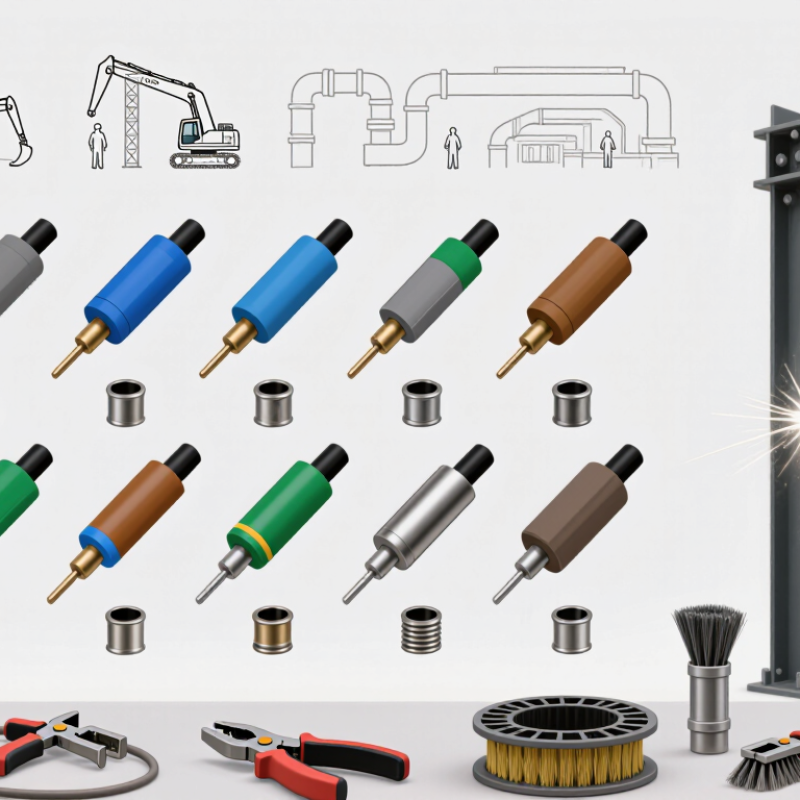
In Chinese welding factories, E6013 and E6011 remain common carbon-steel electrodes under AWS A5.1. Their “60” designation means the deposited weld metal has a minimum tensile strength of 60 ksi. It does not describe yield strength. That distinction matters during purchasing and inspection.
E6013 E6013 usually produces a smooth arc, moderate penetration, and an easily removed slag layer. It suits general fabrication, sheet metal, and many flat or vertical applications.
E6011 E6011 creates a more forceful arc with deeper penetration. It is often selected for repair work, root passes, and surfaces that are not perfectly clean.
Still, rust and oil should be removed. Electrode choice cannot replace preparation.
Factory control requires more than a printed classification. Inspectors should check AWS documentation, lot identification, coating condition, diameter, and storage records. Moisture can damage arc stability and increase porosity risk. Welding current also depends on diameter, position, joint design, and power-source polarity. E6011 commonly works with AC or DCEP, while E6013 may support AC or DC, depending on its qualified design.
A practical mistake is assuming every E6013 behaves identically. Coating formulas and production controls can change handling characteristics. Trial welds, visual checks, and mechanical testing reveal those differences. Even experienced operators sometimes set current too high, creating undercut and excessive spatter. That small error deserves attention.
E7018 is the familiar low-hydrogen electrode for structural and pressure-related welding. Its deposited weld metal reaches the 70 ksi tensile class. In practical shop inspections, dry storage matters as much as electrode selection. Moisture can increase hydrogen risk and encourage cracking in restrained joints. Keep electrodes sealed until use. Follow the supplier’s drying and holding instructions.
E7024 also belongs to the 70 ksi tensile class, but its design differs. It contains substantial iron powder and supports high deposition rates. The electrode performs best in flat and horizontal fillet welds. It is not normally classified as a low-hydrogen electrode. This distinction deserves attention. A factory description may group E7018 and E7024 together, yet their coatings and applications are not identical.
Welders should check the applicable specification, position limits, current range, and batch test records. A clean arc, stable slag removal, and consistent bead profile reveal much about production quality. However, visual appearance cannot prove low-hydrogen performance. Independent tensile, bend, and chemical tests provide stronger evidence. I have seen attractive welds fail after poor storage. That mistake is easy to repeat. A careful purchasing review should include packaging condition, production dates, certificates, and traceability from the factory to the job site.
Stainless-steel electrodes remain essential for chemical equipment, food-processing lines, and repair work. The International Stainless Steel Forum reported global stainless crude-steel production at about 60.6 million tonnes in 2023. That scale creates steady demand for dependable welding consumables.
E308L-16 suits 304 and 304L stainless steel. It offers low carbon content, helping reduce carbide precipitation after welding. E316L-16 is preferred for 316 and 316L applications. Its molybdenum content improves resistance to pitting in chloride environments. E309L-16 is useful when joining stainless steel to carbon steel. It also provides a suitable buffer layer. AWS A5.4/A5.4M defines these classifications and their testing requirements. Real workshop results still depend on storage, joint cleaning, and welder control.
Tips: Keep electrodes dry and follow the supplier’s baking instructions. Use short arcs and remove slag between passes. Confirm the base metal before selection. E309L-16 is not a universal solution. A practical trial weld can reveal dilution problems, especially on thin carbon-steel sections. Heat input deserves attention. Excessive heat may distort panels and weaken corrosion performance. Some factory recommendations appear clear, yet site conditions often prove less predictable.
The chart compares representative nominal weld-metal chemistry values for the three electrode classifications. E308L-16 is commonly used for 18-8 stainless steels, E316L-16 provides molybdenum for improved resistance to pitting and chloride environments, and E309L-16 offers higher chromium and nickel content for dissimilar-metal and heat-resistant stainless-steel joints. Values are indicative nominal compositions based on commonly published AWS A5.4 classification chemistry and are not product certification limits.
Among the top ten Chinese factory welding electrode types, ENi-CI, EFeCr-A1, and ECuSn-C serve demanding repair work. ENi-CI uses nickel or nickel-iron deposits for cast iron. It helps reduce cracking around engine housings, pump bodies, and machine bases. EFeCr-A1 produces a chromium-rich, wear-resistant surface for impact and abrasion. ECuSn-C, a copper-tin electrode, suits bronze components, bushings, and selected dissimilar joints. According to Grand View Research’s 2024 assessment, the global welding electrodes market was valued at about USD 7 billion in 2023. Repair demand remains important because extending equipment life can reduce replacement costs and downtime.
Field experience shows preparation matters more than electrode choice alone. Clean oil and rust completely. Preheat cast iron gradually, then weld short beads with controlled cooling. For ENi-CI, peening each bead lightly may relieve stress, but excessive force can create hidden cracks.
EFeCr-A1 needs careful dilution control; a hard deposit can become brittle when applied too thickly. ECuSn-C requires stable arc control and a clean joint. The AWS Welding Handbook warns that procedure qualification should match the base metal, heat input, and service load. A practical weakness remains: product labels do not always predict workshop results.
Tips: Store electrodes dry, record preheat temperature, and inspect the first repaired section. A small test coupon helps. Ultrasonic or dye-penetrant testing can reveal defects that visual inspection misses. Do not chase maximum hardness blindly; a slightly softer layer may survive impact better. Repair records should include polarity, amperage, bead length, and cooling time.
Top 10 Chinese Factory Welding Electrode Types
A reliable factory begins with the joint, not the catalog. Common choices include rutile, basic low-hydrogen, cellulose, and iron-powder electrodes. Each type responds differently to moisture, arc stability, penetration, and slag removal.
Diameter selection must match plate thickness, welding position, and available current. The 2.5 mm size suits thin sections and root passes. A 3.2 mm electrode offers flexible workshop control. Sizes from 4.0 to 5.0 mm support heavier joints and higher deposition rates. Operators should verify the machine’s output before approval. AC and DCEP performance also needs testing. Some electrodes strike smoothly on AC but perform better on DCEP. That difference is easy to miss.
ISO 2560-based quality control should cover classification, chemical composition, tensile strength, yield strength, elongation, and impact performance. Factories should keep batch records, coating inspections, moisture controls, and traceable test reports. Storage matters. Opened low-hydrogen electrodes may require controlled rebaking, according to the approved procedure. Visual checks alone are insufficient. A weld can look clean and still fail impact testing. In practice, factory trials should use representative steel, real joint gaps, and trained operators. No selection table is perfect. I have seen a technically suitable electrode underperform because the welder used excessive arc length. That weakness deserves review.
| No. | Electrode Type | Typical ISO 2560-A Classification | Common Diameter | Recommended Current | Welding Positions | Typical Application | Factory Selection and QA Focus |
|---|---|---|---|---|---|---|---|
| 1 | Rutile Mild-Steel Electrode | E 42 0 RR 12 160 | 2.5–5.0 mm |
AC
DCEP Approx. 60–230 A |
PA, PB, PC, PF | General fabrication, light structural work, repair welding, and sheet-to-medium plate joints. | Check smooth arc starting, stable slag coverage, easy slag removal, deposited-metal tensile strength, elongation, and visual weld quality. |
| 2 | Basic Low-Hydrogen Electrode | E 42 4 B 32 H5 | 2.5–5.0 mm |
AC
DCEP Approx. 70–240 A |
PA, PB, PC, PF | Load-bearing structures, pressure-related fabrication, bridges, machinery, and restrained joints. | Verify low-diffusible-hydrogen performance, moisture control, rebaking procedure, impact toughness, tensile properties, and lot traceability. |
| 3 | Iron-Powder Rutile Electrode | E 42 0 RR 32 160 | 3.2–5.0 mm |
AC
DCEP Approx. 100–260 A |
PA, PB, PC | High-deposition fillet welds, frames, brackets, tanks, and long horizontal weld runs. | Evaluate deposition efficiency, coating concentricity, bead appearance, slag detachability, dimensional consistency, and weld-metal soundness. |
| 4 | Cellulosic Electrode | E 42 3 C 25 | 2.5–4.0 mm |
DCEP Approx. 60–180 A |
All positions, including vertical-down | Pipeline-style root passes, field erection, outdoor construction, and joints requiring deep penetration. | Control coating moisture and cellulose content; test arc force, penetration profile, hydrogen level, root-pass appearance, and operator handling stability. |
| 5 | Acid-Coated Electrode | E 42 0 A 12 160 | 2.5–5.0 mm |
AC
DCEP Approx. 65–230 A |
PA, PB, PC | Clean carbon-steel fabrication where a smooth bead profile and easy slag release are priorities. | Inspect coating adhesion, arc stability, slag coverage, bead geometry, chemical composition, and resistance to visible porosity. |
| 6 | High-Cellulose Deep-Penetration Electrode | E 42 3 C 25 | 3.2–5.0 mm |
DCEP Approx. 90–220 A |
PA, PF, PG | Open-root joints, pipe work, structural erection, and applications requiring rapid penetration. | Verify root penetration, burn-through control, coating integrity, moisture condition, deposited-metal hydrogen level, and bend-test results. |
| 7 | Low-Alloy High-Tensile Electrode | E 46 4 B 32 H5 | 2.5–5.0 mm |
AC
DCEP Approx. 70–240 A |
PA, PB, PC, PF | Higher-strength structural steels, cranes, heavy equipment, pressure parts, and engineered steel assemblies. | Confirm yield strength, tensile strength, elongation, impact energy, hydrogen designation, chemical limits, and preheat compatibility. |
| 8 | Stainless-Steel Rutile Electrode | E 19 9 LR 12 160 | 2.5–5.0 mm |
AC
DCEP Approx. 55–210 A |
PA, PB, PC, PF | Welding corrosion-resistant austenitic stainless-steel components and dissimilar steel joints. | Check alloy chemistry, ferrite balance, corrosion-related requirements, interpass temperature, spatter control, and weld-metal radiographic quality. |
| 9 | Wear-Resistant Hardfacing Electrode | Not generally classified as a standard ISO 2560-A mild-steel electrode | 3.2–5.0 mm |
AC
DCEP Approx. 90–250 A |
Primarily PA, PB | Repair and protection of crusher parts, excavator teeth, agricultural tools, and abrasion-exposed surfaces. | Use a product-specific hardfacing standard; verify deposit hardness, crack-control behavior, dilution, wear resistance, coating adhesion, and recommended buffer layer. |
| 10 | Cast-Iron Repair Electrode | Not covered by ISO 2560-A for non-alloy and fine-grain steels | 2.5–4.0 mm |
AC
DCEP Approx. 45–150 A |
PA, PB | Localized repair of cast-iron housings, machine bases, pump bodies, and worn cast components. | Verify nickel or nickel-iron chemistry where applicable, machinability, porosity resistance, crack sensitivity, controlled heat input, and packaging protection. |
E7018 is a low-hydrogen electrode for structural and pressure-related welding. Its deposited weld metal reaches the 70 ksi tensile class. Keep electrodes sealed until use. Moisture can increase hydrogen-related cracking risk.
E7024 contains substantial iron powder and supports high deposition rates. It performs best on flat and horizontal fillet welds. It is not normally classified as low-hydrogen. The two types are not interchangeable.
Store electrodes in sealed, dry packaging before use. Follow the supplier’s baking and holding instructions. Check packaging condition and production dates. A good-looking electrode may still have storage damage.
Check batch records, certificates, and traceability information. Tensile, bend, and chemical tests provide stronger evidence than appearance alone. Visual inspection helps, but it cannot prove low-hydrogen performance. That limitation is easy to forget.
E308L-16 suits 304 and 304L stainless steel. E316L-16 suits 316 and 316L applications, especially chloride environments. E309L-16 helps join stainless steel to carbon steel. It is not a universal solution.
Clean the joint carefully and remove slag between passes. Use short arcs and control heat input. Excessive heat can distort thin panels. A practical trial weld may reveal dilution problems.
ENi-CI is used for cast iron repairs on housings, pump bodies, and machine bases. EFeCr-A1 creates a chromium-rich, wear-resistant surface. ECuSn-C suits bronze parts, bushings, and selected dissimilar joints. Results vary with preparation.
Remove oil and rust completely before welding. Preheat gradually and use short beads. Control cooling carefully. Light bead peening may relieve stress, but excessive force can create hidden cracks.
No. A slightly softer layer may survive impact better than an extremely hard deposit. Control dilution, thickness, heat input, and cooling time. Small tests help. Harder is not always better.
Inspect the first repaired section before continuing. Ultrasonic or dye-penetrant testing can find defects missed by visual inspection. Record polarity, amperage, bead length, and cooling time. Records make later reflection easier.
Chinese Factory Welding Electrode selections cover a broad range of welding applications, from general carbon-steel fabrication to specialized repair work. E6013 and E6011 electrodes, classified under AWS A5.1 with 60 ksi strength, are suitable for common structural and maintenance tasks. For higher-strength requirements, E7018 and E7024 provide a 70 ksi tensile class and dependable weld performance when properly stored and used.
Stainless-steel options such as E308L-16, E316L-16, and E309L-16 support different corrosion-resistant and dissimilar-metal applications. Specialty electrodes, including ENi-CI, EFeCr-A1, and ECuSn-C, are designed for cast iron, wear-resistant repairs, and copper-alloy work. When selecting products, factories should evaluate 2.5–5.0 mm diameters, AC or DCEP compatibility, coating condition, packaging, and quality procedures aligned with ISO 2560. These standards help ensure consistent arc stability, weld strength, usability, and reliable production results.

Tianqiao Welding