Choosing a reliable Welding Electrode Factory in 2026 requires more than comparing prices. It demands evidence from the production floor, testing laboratory, and shipment records. A factory may display modern equipment, yet still struggle with inconsistent coating moisture or unstable arc performance. These small failures can create visible spatter, uneven beads, and costly rework. They deserve careful attention.
Dr. John C. Lippold, a respected welding metallurgy expert, states, “Weldability is the capacity of a material to be welded under the fabrication conditions imposed.” His principle remains useful when evaluating electrodes. The right supplier must understand base metals, welding positions, storage conditions, and actual jobsite demands. Look for controlled raw materials, documented batch traceability, AWS or ISO-based quality systems, and test reports that match delivered products. Ask whether the factory checks tensile strength, deposition efficiency, moisture resistance, and coating adhesion. Real samples matter more than polished brochures.
A strong Welding Electrode Factory should also communicate clearly before signing an order. Request production lead times, packaging details, inspection procedures, and corrective-action records. Visit the facility if possible. Observe wire drawing, flux mixing, extrusion, drying ovens, and final inspection. Some suppliers appear impressive but cannot explain their test data. That is a warning. No factory is perfect, and buyers should admit this early. The better question is whether the manufacturer identifies weaknesses, corrects them, and proves improvement. This guide examines those practical signals, helping buyers choose a dependable partner for safer, cleaner, and more consistent welding results in 2026.
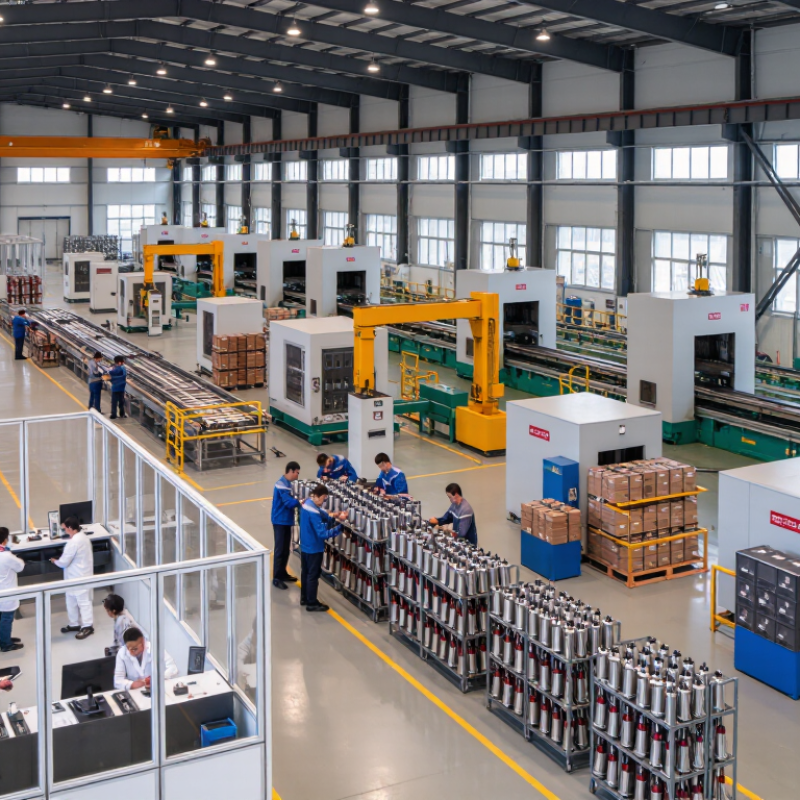
How to Choose a Top Welding Electrode Factory in 2026?
What Defines a Top Welding Electrode Factory in 2026?
A top welding electrode factory is defined by measurable consistency, not attractive machinery. Each batch should show coating moisture, tensile strength, deposition efficiency, and diffusible hydrogen results. ISO 2560 provides classification guidance for covered electrodes used with non-alloy and fine-grain steels. Reliable factories test against these requirements before shipment, not after customer complaints.
Traceability is equally important. A QR code or batch record should connect every carton to raw materials, mixing time, oven temperature, and inspection results. The International Federation of Robotics reported 541,302 industrial robots installed worldwide in 2023. Automation can reduce variation, but it cannot replace skilled process control. A factory still needs trained welding engineers and calibrated testing equipment.
Environmental performance now matters more. The International Energy Agency reports that industry remains a major source of global energy-related emissions, so efficient production deserves scrutiny. Ask for electricity data, waste-recovery records, and realistic emissions targets. Be careful with impressive claims. A spotless audit sheet is not proof of stable electrodes. In practice, buyers should review retained samples, storage conditions, and failure records. Some factories may resist this level of transparency. That is a warning sign. Even advanced suppliers can miss defects, and honest reporting is often more valuable than perfect-looking statistics.
A reliable electrode factory should provide more than attractive certificates. Ask for production records, test reports, and clear batch traceability. Each package should connect to raw materials, coating dates, drying conditions, and final inspection results. Small details matter. Check whether diameter, coating thickness, and moisture levels remain consistent across several batches. In practical inspections, uneven coating often appears as rough arc starts, excessive spatter, or unstable bead formation.
Manufacturing standards must match the electrode’s intended application. Confirm testing against relevant requirements, such as ISO or AWS specifications, without accepting vague claims. Review tensile strength, yield strength, elongation, impact performance, and deposited-metal chemistry. A capable factory should explain its testing equipment and calibration schedule. It should also control furnace temperature and storage humidity. Ask to see retained samples from previous lots. They reveal more than a polished brochure.
Factory experience becomes clearer during technical discussions. Skilled engineers can explain why a coating formula changes arc stability or slag removal. They should also describe corrective action when a batch fails inspection. No process is perfect. I would treat an unusually flawless record with caution and request independent verification. Factory audits, sample welding trials, and documented quality procedures provide stronger evidence than price alone. Watch the weld pool closely. A dependable manufacturer welcomes detailed questions, even uncomfortable ones.
A top welding electrode factory in 2026 should show more than a polished production line. ISO 9001 demonstrates controlled quality management, while ISO 3834 focuses specifically on welding quality requirements. For pressure equipment, EN 13479 and relevant product standards can strengthen technical credibility. Ask for current certificates, scope statements, and issuing-body verification. A certificate without the correct product scope is weak evidence.
Factory technology matters just as much. Automated powder batching, sealed mixing systems, controlled extrusion, and high-temperature baking help stabilize coating performance. Moisture-controlled storage is essential for low-hydrogen electrodes. Request batch records, oven temperature logs, chemical analysis, tensile results, and radiographic or bend-test data where applicable. The International Federation of Robotics reported 541,302 industrial robots installed worldwide in 2023. Automation is growing, but robots alone cannot guarantee consistent weld metal.
I would also inspect traceability from raw materials to cartons. A reliable factory should connect each batch with operator records, calibration data, and laboratory results. ISO’s 2023 survey recorded more than 1.26 million ISO 9001 certificates globally, so certification is common, not exceptional. That is an uncomfortable point. Audits, sample testing, and factory experience still matter. Ask whether the laboratory follows ISO/IEC 17025 principles and whether failed batches remain visible in the records. Some suppliers may hesitate. That hesitation deserves attention.
How to Choose a Top Welding Electrode Factory in 2026?
Production capacity should mean more than monthly output. Ask for line capacity, tested capacity, and recent utilization rates. The difference matters. A factory producing 2,000 tonnes monthly may operate near its limit. One producing 1,500 tonnes may offer better scheduling flexibility. The International Federation of Robotics reported 541,302 industrial robot installations worldwide in 2023. Automation can improve consistency, but it does not replace process controls, skilled technicians, or batch inspections. Request records for coating weight, moisture control, tensile strength, and rejection rates.
Customization requires technical discipline. Confirm available electrode classifications, coating types, core-wire sizes, packaging formats, and private specifications. Each change should include trial batches, laboratory results, and approval samples. Ask whether the factory can maintain identical performance across several production lots. A polished sample proves little. Review certificates against recognized welding standards, then compare actual test data with your application conditions. A small weakness may appear later.
Delivery deserves equal attention. UNCTAD’s Review of Maritime Transport 2024 states that maritime shipping carries over 80% of global merchandise trade by volume. Port congestion, booking shortages, and weather can disrupt otherwise strong suppliers. The World Bank’s 2023 Logistics Performance Index also highlights reliability and shipment timeliness as key logistics measures. Compare lead times, safety stock, export documentation, and contingency plans. A factory promising the fastest shipment may simply be estimating optimistically. Require a realistic production calendar, not a perfect one.
| Evaluation Area | Profile A High-Capacity Factory |
Profile B Flexible Mid-Size Factory |
Profile C Specialty Factory |
Profile D Export-Focused Factory |
Recommended Verification Method |
|---|---|---|---|---|---|
| Monthly Production Capacity | 8,000–12,000 metric tons Suitable for large recurring orders |
2,000–5,000 metric tons Balanced capacity and flexibility |
500–1,500 metric tons Focused on specialized products |
3,000–7,000 metric tons Designed for stable export programs |
Request production records, equipment lists, shift schedules, and recent capacity-utilization data. |
| Common Electrode Types | Routine carbon-steel electrodes for general fabrication and construction | General-purpose electrodes with multiple coating and packaging options | Stainless-steel, low-hydrogen, hardfacing, and other application-specific electrodes | General-purpose and low-hydrogen products prepared for international shipment | Match the factory’s documented product range with the required AWS or applicable national classification. |
| Typical Minimum Order Quantity | 10–20 metric tons | 3–10 metric tons | 1–5 metric tons | 5–15 metric tons | Confirm MOQ by electrode type, diameter, coating, packaging format, and production batch. |
| Customization Capability | Standard diameter, coating, carton, pallet, and private-label packaging options | Strong flexibility for coating adjustments, package quantities, labels, and cartons | High technical customization for application-specific requirements | Export labels, multilingual packaging, pallet configuration, and shipment documentation | Ask for a written technical specification, sample approval process, artwork confirmation, and change-control procedure. |
| Sample Development Lead Time | 7–14 calendar days for standard samples | 5–12 calendar days for standard or modified samples | 10–21 calendar days for specialty formulations | 7–15 calendar days, excluding packaging artwork approval | Measure the time from complete specification approval to dispatch of representative samples. |
| Standard Production Lead Time | 15–25 calendar days | 18–30 calendar days | 25–45 calendar days | 20–35 calendar days | Obtain a written lead-time commitment that separates production, inspection, packing, and booking time. |
| Quality-Control Coverage | Incoming raw-material inspection, in-process checks, final testing, and batch traceability | Incoming inspection, welding-performance checks, final inspection, and retained samples | Detailed chemical, mechanical, coating, moisture, and weld-performance testing | Batch inspection, export packing checks, container loading records, and document review | Review sample test reports, calibration records, inspection plans, nonconformity procedures, and traceability examples. |
| Moisture and Storage Controls | Dedicated controlled storage and batch identification | Controlled storage with documented drying or rebaking procedures where applicable | Enhanced controls for low-hydrogen and moisture-sensitive products | Controlled storage plus export packing protection against humidity during transit | Check storage conditions, packaging integrity, product shelf-life guidance, and handling instructions. |
| Certification and Compliance Documentation | Quality-management certification and product test documentation available upon request | Quality-management documentation and batch inspection records available upon request | Product-specific technical files and performance documentation | Quality, packing, origin, and shipment documents prepared for export procedures | Verify certificate validity, issuing body, scope, product coverage, and consistency with the purchase specification. |
| On-Time Delivery Target | 95% Best for planned high-volume schedules |
92% Good balance for repeat orders |
90% Specialty work may require longer planning |
94% Strong shipment coordination |
Request the previous six to twelve months of anonymized delivery performance rather than relying only on a sales promise. |
| Best-Fit Purchasing Scenario | Large-volume, standardized products with predictable monthly demand | Medium-volume orders requiring packaging or specification flexibility | Technical applications where formulation and welding performance are priorities | International orders requiring coordinated documentation and container loading | Select the profile that matches order volume, technical risk, customization level, and delivery tolerance. |
| Primary Purchasing Risk | Less flexibility for very small batches or frequent specification changes | Capacity may become constrained during seasonal demand peaks | Longer lead times and higher unit costs for specialized formulations | Shipping schedules may be affected by booking availability and port congestion | Use a trial order, approved sample, inspection hold point, and clearly defined delivery terms before scaling up. |
How to Choose a Top Welding Electrode Factory in 2026?
Factory reliability starts with evidence, not polished promises. Request recent ISO 9001 audit records, production capacity data, and batch-level traceability. The ISO Survey 2023 reported more than 1.2 million ISO 9001 certificates worldwide. Certification matters, but it does not prove every electrode performs consistently. Review mill test reports, moisture-control procedures, packaging dates, and storage conditions. Ask for samples from different production lots. A single excellent sample can mislead buyers.
Tips: Check whether technical support answers within one business day. Ask for welding procedure guidance, defect analysis, and operator training. Reliable factories should explain coating chemistry, current ranges, and re-drying limits clearly. Their engineers should understand your base metal and working environment. Support after shipment often reveals more than a factory tour.
Long-term value also includes worker safety and predictable delivery. The International Labour Organization reported nearly three million work-related deaths annually. Therefore, review ISO 45001 practices, ventilation controls, and documented safety training. Ask how the factory handles complaints and corrective actions. Request delivery records from the past twelve months. I would also compare failure rates, not only unit prices. Cheap electrodes become expensive when slag removal increases or weld repairs interrupt production. Some evidence may look incomplete. That is a warning, not a minor detail.
Reliable factories prove consistency through recorded test results. They check coating moisture, tensile strength, deposition efficiency, and diffusible hydrogen. A polished production line is not enough. No factory is flawless.
Ask for current quality-management and welding-quality certifications. Check the certificate scope, expiry date, and issuing body. A certificate covering unrelated products offers weak protection. Verify it independently.
It is essential for investigating defects quickly. A QR code should connect cartons with raw materials and inspection results. Records should include mixing time, oven temperature, operators, and calibration data. Paperwork can still be incomplete.
Automated powder batching can reduce ingredient variation. Sealed mixing protects coating materials from moisture. Controlled extrusion and high-temperature baking improve coating stability. Automation helps, but skilled engineers remain necessary.
Request samples from several production lots. Review moisture results, tensile data, bend tests, and chemical analysis. Ask to see retained samples and failed-batch records. One excellent sample proves little.
Low-hydrogen electrodes need dry, controlled storage. Ask about packaging dates, warehouse humidity, and re-drying limits. Oven temperature logs should be available for review. Moisture causes trouble.
Ask whether engineers respond within one business day. They should explain current ranges, coating chemistry, and suitable base metals. Useful support includes defect analysis and operator training. Fast replies are not always good answers.
Yes, long-term value includes worker safety and predictable delivery. Review ventilation controls, safety training, complaint handling, and corrective actions. Request delivery records covering the past twelve months. Cheap electrodes may create costly repairs.
Request electricity data, waste-recovery records, and realistic emissions targets. Compare claims with factory evidence and production volumes. A spotless audit sheet may hide unstable performance. I would remain cautious.
Choosing the right Welding Electrode Factory in 2026 requires more than comparing prices. A leading factory should demonstrate consistent product quality, controlled raw materials, modern production equipment, and strict manufacturing procedures. Buyers should review welding performance, coating uniformity, storage stability, and testing methods, while also checking relevant quality, environmental, and safety certifications. Advanced technologies such as automated production, digital process monitoring, and laboratory testing can further indicate a factory’s ability to deliver reliable electrodes.
It is also important to evaluate production capacity, customization options, packaging flexibility, and delivery performance. A dependable factory should communicate clearly, provide technical documentation, support sample testing, and respond efficiently to quality concerns. Reviewing production records, customer references, inspection reports, and long-term service capabilities can help confirm reliability. Ultimately, the best choice is a Welding Electrode Factory that combines stable quality, practical innovation, flexible cooperation, dependable delivery, and professional support, creating lasting value rather than focusing only on the lowest initial cost.
Tianqiao Welding