China Top 10 Welding Consumables Suppliers for Global Buyers

Time:2026-09-17 Author:Liam
0%

China Top 10 Welding Consumables Suppliers for Global Buyers explores a market shaped by infrastructure, shipbuilding, energy, and advanced manufacturing. Welding Consumables include electrodes, wires, fluxes, and related materials. Their quality influences arc stability, penetration, spatter, and long-term joint performance.

Grand View Research valued the global welding products market at approximately USD 16.4 billion in 2023. Its report forecasts continued growth through 2030, supported by automation and industrial investment. MarketsandMarkets also identifies Asia-Pacific as a leading regional market for welding materials. China remains especially important because of its broad manufacturing base, production scale, and export network.

Numbers do not tell the whole story.

A low unit price can hide inconsistent wire feeding, unstable coating quality, or weak batch traceability. Buyers should examine ISO 9001 systems, AWS or EN classifications, mill certificates, test reports, packaging conditions, and after-sales technical support. Factory audits and sample weld trials are still valuable, even when supplier documents look complete.

John C. Lippold, a leading welding metallurgy expert, defines weldability as “the capacity of a material to be welded under fabrication conditions” and perform satisfactorily in service. This principle matters when comparing China’s top suppliers. A product must match the base metal, welding process, position, shielding gas, and service environment.

This guide evaluates suppliers through that practical lens. It considers product range, manufacturing experience, certifications, customization, export reliability, and technical responsiveness. Rankings remain imperfect because supplier capabilities change, and public data can be limited. Buyers should verify current certificates and production evidence before placing large orders.
China Top 10 Welding Consumables Suppliers for Global Buyers

Welding Consumables Scope: Electrodes, Wires, Fluxes, and Industry Data

China Top 10 Welding Consumables Suppliers for Global Buyers

China’s welding consumables market covers electrodes, solid wires, flux-cored wires, and submerged arc fluxes. Global buyers should compare more than catalog prices. Product consistency matters during long weld runs. Check coating adhesion, wire diameter tolerance, flux moisture, and packaging strength. Small variations can cause porosity, unstable arcs, or extra grinding.

Industry data helps assess supplier reliability. Review monthly capacity, batch traceability, laboratory equipment, export experience, and quality certificates. Request mill test reports and sample batches before approving a large order. For electrodes, examine drying instructions and storage limits. For wires, confirm spool dimensions and feeding performance. For fluxes, verify particle size, basicity, and recycling guidance. A clean spreadsheet can still hide weak production control. Data needs physical verification.

Tips: Ask for recent batch records, not old samples. Test materials under your actual welding settings. Record current, voltage, travel speed, and shielding gas. Keep sealed packaging during transport and storage. Do not judge a supplier from one successful trial. Repeat testing when the application changes. This step is often missed. Supplier rankings may offer direction, but independent inspection gives stronger evidence. Mistakes happen, especially when buyers rely on certificates without checking batch details.

China’s Top 10 Suppliers: Capacity, Export Reach, and Product Categories

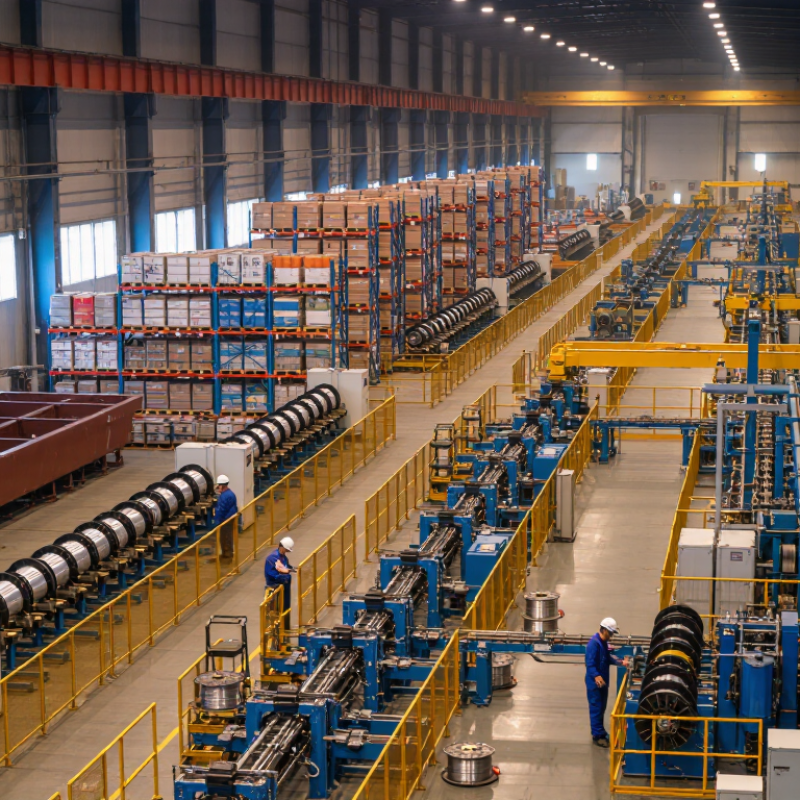
China’s top ten welding consumables suppliers serve buyers across construction, shipbuilding, machinery, energy, and repair industries. Their product categories commonly include covered electrodes, MIG/MAG wires, TIG rods, flux-cored wires, and submerged arc welding materials. Some also supply wear-resistant alloys and customized private-label packaging.

Production capacity varies widely. Larger factories often operate automated drawing, coating, spooling, and packing lines. Their warehouses may hold several wire diameters and electrode grades for regular export orders. Medium-sized suppliers can be more flexible, especially for trial batches or application-specific formulations. Buyers should check monthly output, backup equipment, and raw material storage, not only stated factory size. Numbers can be difficult to compare.

Export reach is broad. Suppliers ship through major Chinese ports to Southeast Asia, the Middle East, Africa, Europe, and the Americas. Experienced exporters usually provide multilingual documents, moisture-resistant packaging, lot identification, and pre-shipment inspection support. Reliable factories can share test reports, batch records, and certification evidence from recognized testing bodies. These details matter more than attractive catalog images.

A practical review should compare deposition efficiency, arc stability, tensile performance, and storage life. Ask for samples from several production lots. One sample can mislead. Product quality may also change when humidity, voltage, or operator technique differs. A careful supplier should discuss these limitations openly, although not every sales team does. Independent audits and small pilot orders remain sensible safeguards for global buyers.

AWS A5.1 E7018 and ISO 2560-A: Core Compliance Benchmarks

China Top 10 Welding Consumables Suppliers for Global Buyers

AWS A5.1 E7018 remains a practical benchmark for structural fabrication. Its classification indicates 70 ksi minimum tensile strength, all-position capability, and low-hydrogen performance. The “8” also signals iron powder and basic coating characteristics. However, E7018 is not automatically identical to ISO 2560-A E 42 4 B 32 H5.

ISO 2560-A adds clearer impact and hydrogen controls. E 42 4 B 32 H5 typically requires at least 420 MPa yield strength, 470–600 MPa tensile strength, and 47 J impact energy at -40°C. H5 limits diffusible hydrogen to 5 ml per 100 g deposited weld metal. Buyers should request batch certificates, not only product brochures. Small details matter: electrode moisture, oven temperature, and exposure time can change weld performance.

The World Steel Association reported approximately 1.89 billion tonnes of crude steel production in 2023. This scale supports continued demand for reliable consumables in bridges, pressure equipment, and heavy machinery. A 2024 industrial welding market review by Grand View Research also identified infrastructure and manufacturing as major demand sectors. Still, market reports can simplify regional quality differences. In practical audits, a neat certificate does not guarantee stable arc behavior. Sample testing under actual joint conditions remains necessary. Jiova

Supplier Comparison: Tensile Strength, Deposition Rate, and H8 Hydrogen

China’s top welding consumables suppliers should be compared by test data, not catalogue claims. AWS A5.1 and A5.18 classifications commonly specify minimum tensile strength near 490 MPa for 70 ksi electrodes and wires. Actual results vary with shielding gas, heat input, and operator technique. Check the mill certificate.

Deposition rate separates a productive supplier from an average one. IIW process guidance indicates that mechanized flux-cored welding can exceed 5 kg per hour, while manual covered-electrode welding often remains below 2 kg per hour. These figures are practical references, not guarantees. A 1.2 mm wire may deposit faster than a 3.2 mm electrode, but excessive current can increase spatter and distortion.

Hydrogen control deserves equal attention. ISO 3690 defines H8 as no more than 8 ml of diffusible hydrogen per 100 g of deposited weld metal. Low-hydrogen consumables require sealed packaging, controlled rebaking, and dry storage.

A supplier should provide test conditions, not only an H8 label. Ask for weld-metal tensile results, deposition efficiency, diffusible hydrogen reports, and batch traceability. Small details matter. I would still question unusually high deposition figures without joint samples, because laboratory performance rarely matches a dusty fabrication floor.

Global Buyer Checklist: MTCs, MOQ, Lead Time, Incoterms, and Warranty

Global Buyer Checklist for Welding Consumables

A reliable supplier should provide a Material Test Certificate with every relevant batch. Check the heat number, chemical composition, tensile strength, yield strength, and impact results. The certificate should match the product label and packing list. Traceability matters when electrodes arrive in sealed cartons, not loose bundles. Ask whether testing follows the stated standard and whether an independent laboratory can verify results. A polished MTC is not enough.

Confirm the minimum order quantity for each diameter, coating type, and packing format. Some suppliers quote one MOQ, then apply separate limits to mixed containers. Request a written production schedule showing raw material preparation, manufacturing, inspection, and dispatch. Distinguish warehouse stock from made-to-order goods. Lead time can change during peak seasons. Allow a practical buffer.

Incoterms must name the delivery place, not only the trade rule. Clarify export clearance, freight, insurance, unloading, and import responsibilities before payment. For warranty terms, check coverage length, storage requirements, acceptable moisture levels, and the claim deadline. Ask what evidence supports a defect claim, such as photos, batch samples, or test reports. I once treated warranty language as routine paperwork; that was careless. Small omissions can become expensive disputes. Get every promise in the quotation and contract.

China Top 10 Welding Consumables Suppliers for Global Buyers

Typical export lead-time benchmarks by welding consumable category, shown in calendar days.

Planning benchmark for standard export orders: lead time commonly increases with product complexity, production scheduling, packaging requirements, and inspection documentation. Buyers should confirm MTC availability, MOQ, Incoterms, warranty terms, and final delivery dates before placing an order.

FAQS

What does the E7018 classification generally indicate?

It indicates 70 ksi minimum tensile strength and all-position welding capability. The coating supports low-hydrogen performance. The final “8” also suggests iron powder and basic coating features.

Is E7018 automatically identical to the related international classification?

No, the classifications are not automatically identical. The international classification adds specific impact and hydrogen requirements. Check certificates before treating them as equivalent.

What mechanical properties may the international classification require?

It may require at least 420 MPa yield strength and 470–600 MPa tensile strength. Impact energy may reach 47 J at -40°C. Requirements can vary by exact designation.

What does an H5 hydrogen rating control?

H5 limits diffusible hydrogen to 5 milliliters per 100 grams of deposited weld metal. Moisture control remains important. Tiny storage mistakes can matter.

Which documents should buyers request from a supplier?

Request a batch Material Test Certificate, product label, and packing list. Check the heat number, chemistry, strength, and impact results. A polished certificate is not enough.

Why should electrode storage conditions be checked?

Moisture, oven temperature, and exposure time can change welding performance. Keep electrodes sealed when possible. Storage instructions need practical records.

What should buyers confirm about minimum order quantities and delivery times?

Confirm quantities for every diameter, coating type, and packing format. Mixed containers may have separate limits. Request a written production schedule.

What should a quotation clarify about delivery and warranty terms?

It should identify the delivery place and responsibility for freight, insurance, unloading, and import tasks. Warranty terms should cover storage, moisture limits, claim deadlines, and evidence requirements. I once treated warranty wording as routine paperwork. That was careless.

Conclusion

This guide offers global buyers a practical overview of China’s Welding Consumables sector, covering electrodes, solid and flux-cored wires, submerged arc fluxes, and related industrial data. It explains how to evaluate leading suppliers by production capacity, export experience, product range, quality systems, and ability to support different industries and project requirements. Special attention is given to AWS A5.1 E7018 and ISO 2560-A, which serve as important compliance benchmarks for low-hydrogen electrodes, mechanical performance, usability, and classification.

The comparison framework focuses on tensile strength, deposition rate, weldability, and diffusible hydrogen levels, helping buyers match products with technical specifications and operating conditions. A practical purchasing checklist also covers mill test certificates, minimum order quantities, production and shipping lead times, Incoterms, packaging, inspection procedures, and warranty terms. By reviewing these factors systematically, buyers can reduce sourcing risks, improve cost control, and select suppliers capable of providing consistent quality and dependable international delivery.

Liam

Liam

Liam is a dedicated marketing professional with a profound expertise in the industry, where he excels at highlighting the unique advantages of our core products. With a keen understanding of market trends and consumer needs, Liam frequently updates our company’s professional blog, providing......