The use of Carbon Steel Welding Electrode is critical in various industries. These electrodes are essential for joining carbon steel parts, widely used in construction, manufacturing, and automotive sectors. According to a report by the American Welding Society, carbon steel accounts for over 70% of welding materials used globally.
Applications of Carbon Steel Welding Electrodes are diverse. They include fabricating structures like bridges, pipelines, and machinery components. The versatility of these electrodes allows for effective welding in various positions. However, the choice of the correct electrode can significantly impact weld quality. This factor often requires careful consideration and expertise.
Despite the advantages, challenges remain. Weld instructors indicate that improper usage can lead to defects. Issues like porosity and inadequate fusion commonly arise from lack of experience. Maintaining proper electrode storage and handling is also crucial. A report by the International Institute of Welding emphasizes the importance of thorough training and quality control in electrode applications. These factors ensure reliability and durability in welded structures, highlighting the need for ongoing education in welding practices.
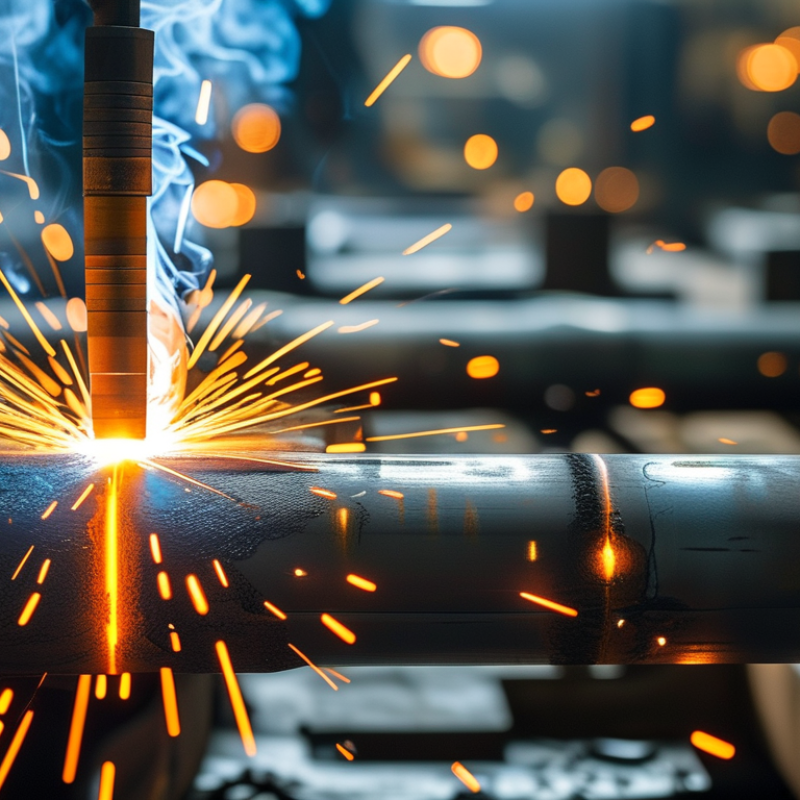
Carbon steel welding electrodes are essential in the welding industry. They help join carbon steel components effectively. These electrodes are often made from a mixture of steel and various additives. The composition influences their performance and application. According to the American Welding Society, carbon steel welding electrodes account for over 60% of welding consumables used annually.
The primary advantage of carbon steel electrodes is their versatility. They are suitable for various welding processes, including MIG, TIG, and stick welding. Additionally, they provide strong welds with good ductility and tensile strength. In structural applications, such as construction, they ensure reliability and safety. It is crucial to select the correct type based on the specific needs of a project.
However, improper use can lead to defects. Common issues include porosity and inadequate penetration. Training welders on electrode selection and application is essential. Research by the American Welding Society reveals that improper technique raises defect rates by 20%. Continuous education and practice can enhance the skill set of welders, ensuring higher quality work.
| Electrode Type | Composition | Applications | Welding Technique |
|---|---|---|---|
| E6011 | Low Carbon Steel | General purpose, pipe welding | SMAW (Shielded Metal Arc Welding) |
| E6013 | Low Carbon Steel with Mineral Coating | Sheet metal, light fabrication | SMAW |
| E7018 | Low Hydrogen Iron Powder | Structural welding, high-strength applications | SMAW |
| E311-17 | Cellulose Coated | Heavy gauge materials, outdoor work | SMAW |
| E7024 | Iron Powder, High Deposited Weld Metal | Fillet welds in heavy sections | SMAW |
: Carbon steel welding electrodes are tools used to join carbon steel components. They are essential in the welding industry.
These electrodes are primarily made from steel and various additives. Their composition impacts performance and application.
They are versatile and suitable for MIG, TIG, and stick welding. They provide strong welds and good ductility.
Yes, they may not perform well in high temperature or corrosive environments. Other materials might be more suitable.
Issues like porosity and inadequate penetration can occur. Training is necessary to minimize these defects.
It helps improve technique and reduces defect rates. According to research, improper technique can raise defects by 20%.
They offer great conductivity and durability but can show varying ductility. This may lead to unexpected fractures.
Regular testing and quality checks are essential. Understanding material properties leads to better decision-making.
Not all. Careful consideration of the application is necessary. Some projects may need different materials.
Good weldability enhances performance. Welders must assess this when selecting electrodes for their specific applications.
Carbon Steel Welding Electrodes are essential components in the welding process, designed to facilitate the joining of carbon steel materials. They come in various types, including coated and uncoated electrodes, each tailored to specific welding techniques and applications. The properties of these electrodes, such as conductivity, strength, and resistivity to various conditions, make them suitable for durable welds in diverse industrial contexts.
Applications of Carbon Steel Welding Electrodes span across multiple industries, including construction, manufacturing, and automotive, where robust and reliable joints are critical. While these electrodes offer advantages like affordability and versatility, they also come with limitations, such as susceptibility to corrosion and the need for proper technique to achieve optimal results. Overall, understanding the characteristics and applications of Carbon Steel Welding Electrodes empowers welders to make informed choices for their projects.

 Tianqiao Welding